Backyard Concrete Patio Poured and Done in 2 Days
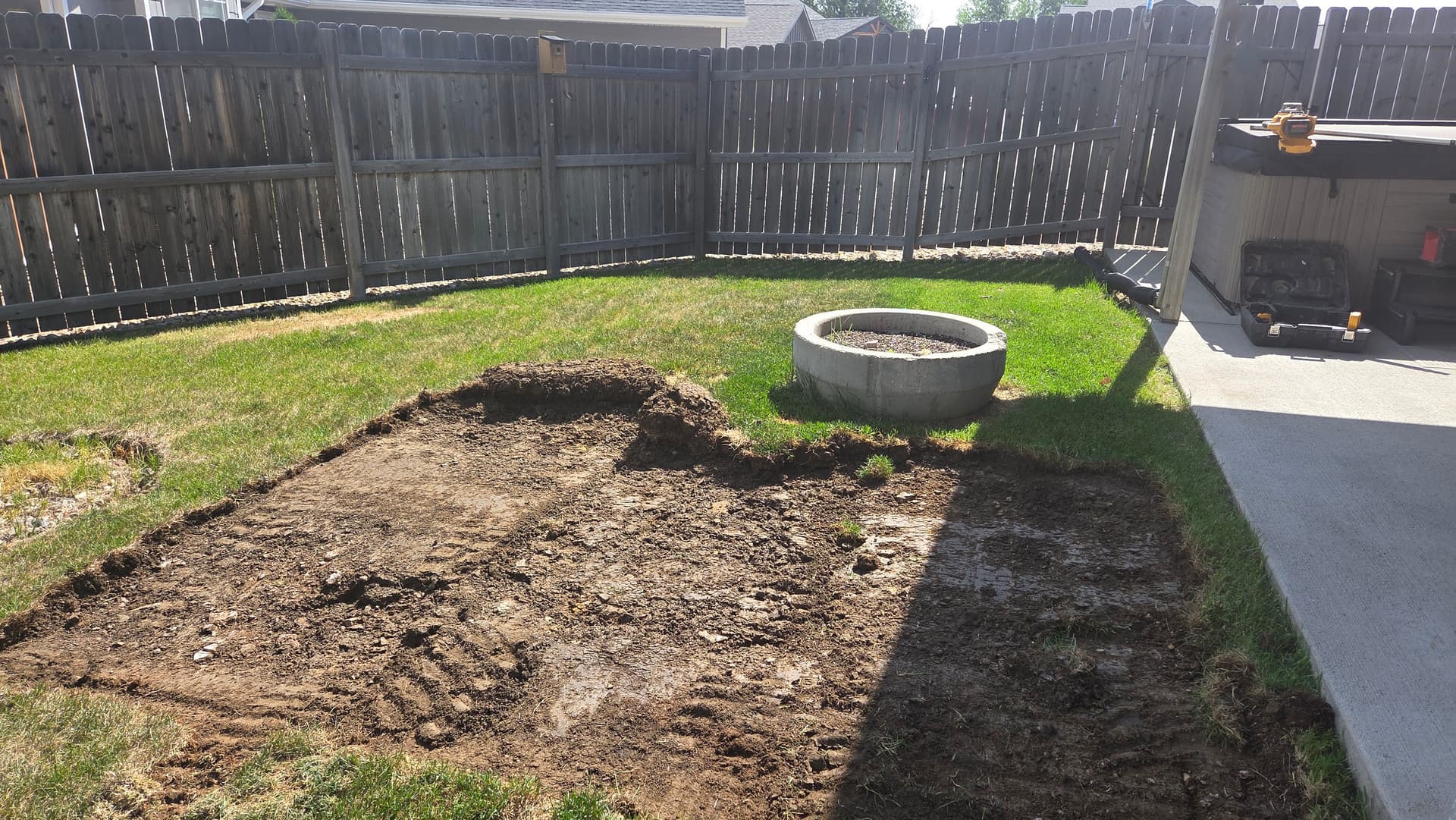
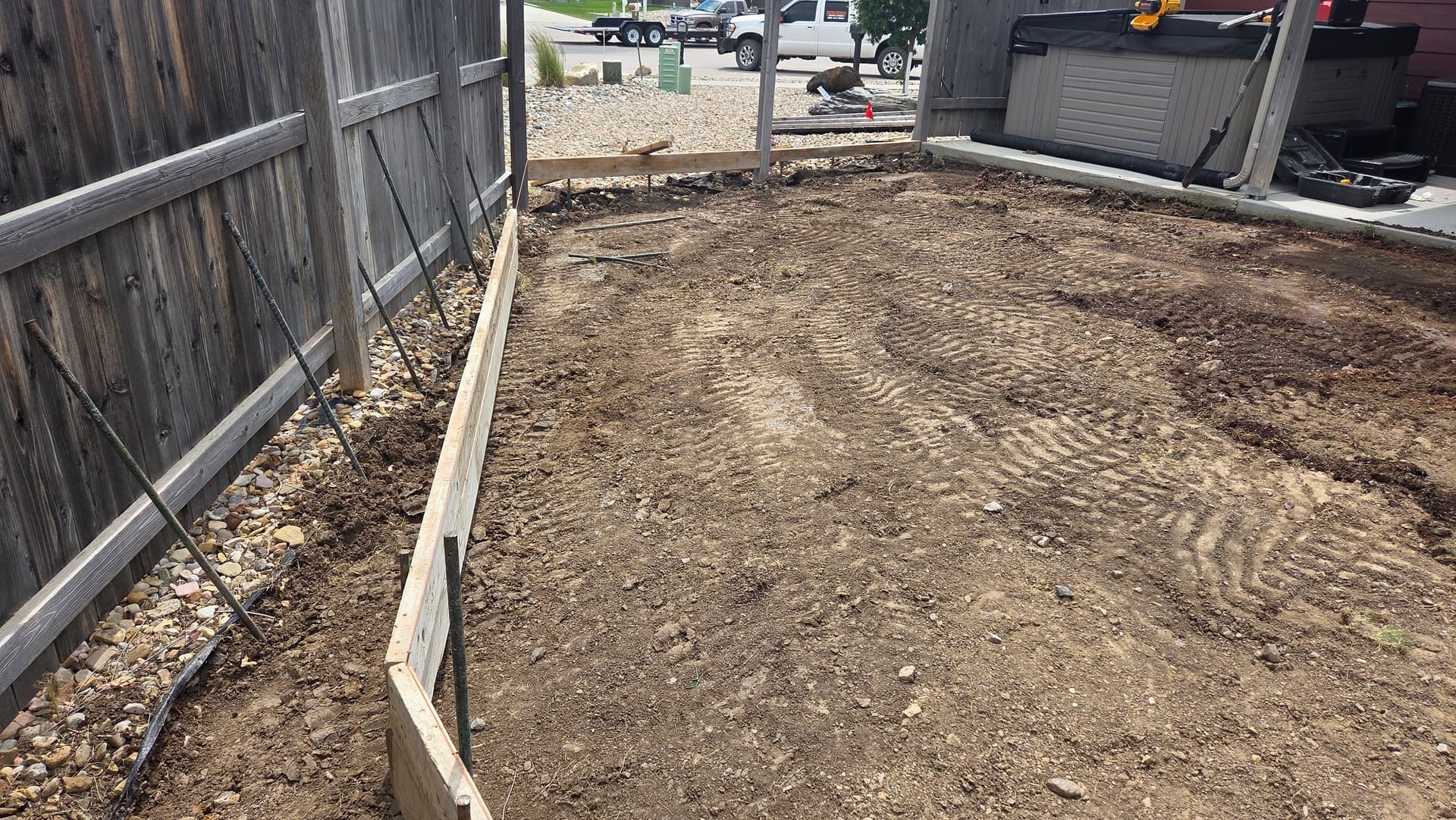
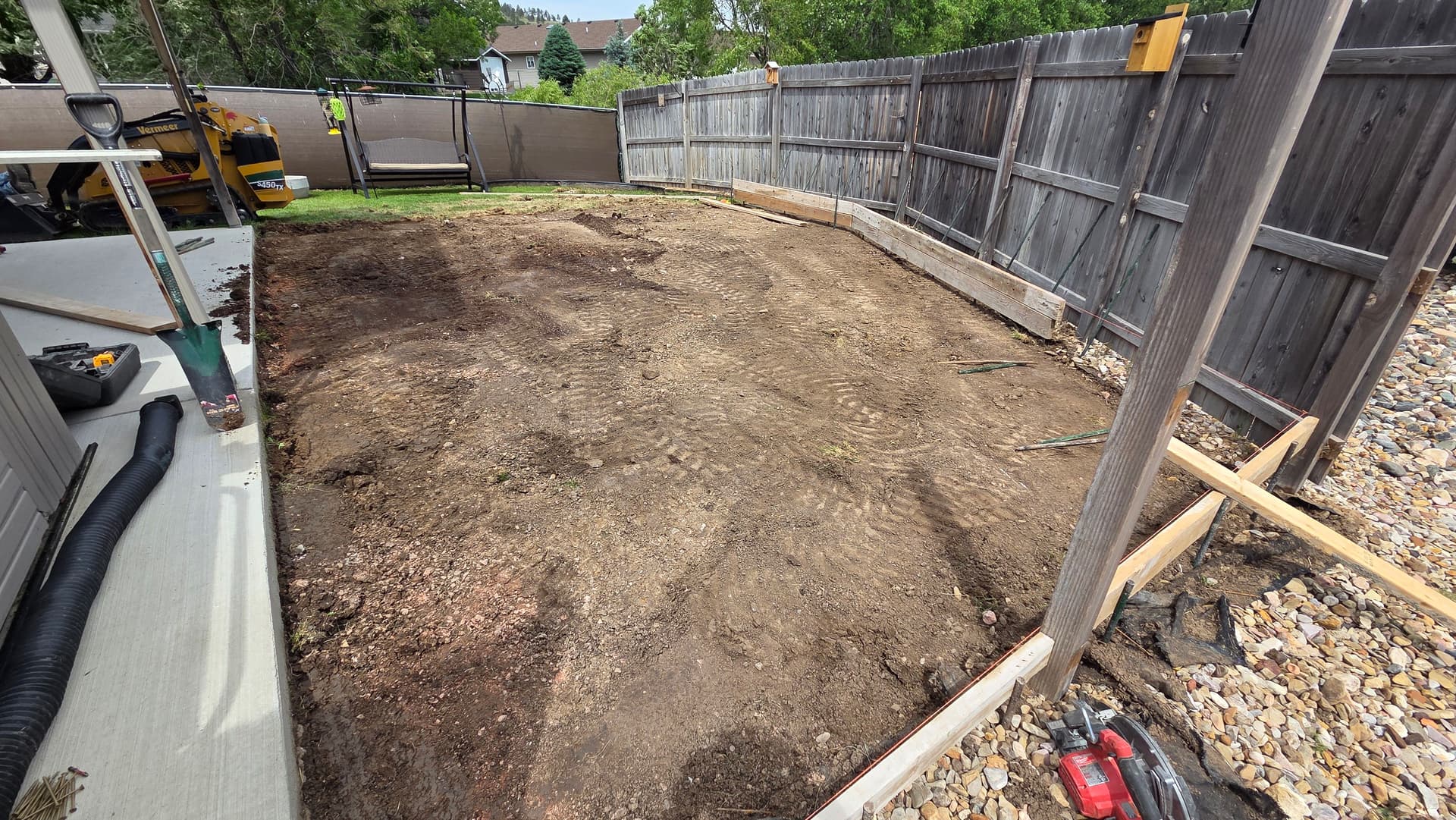
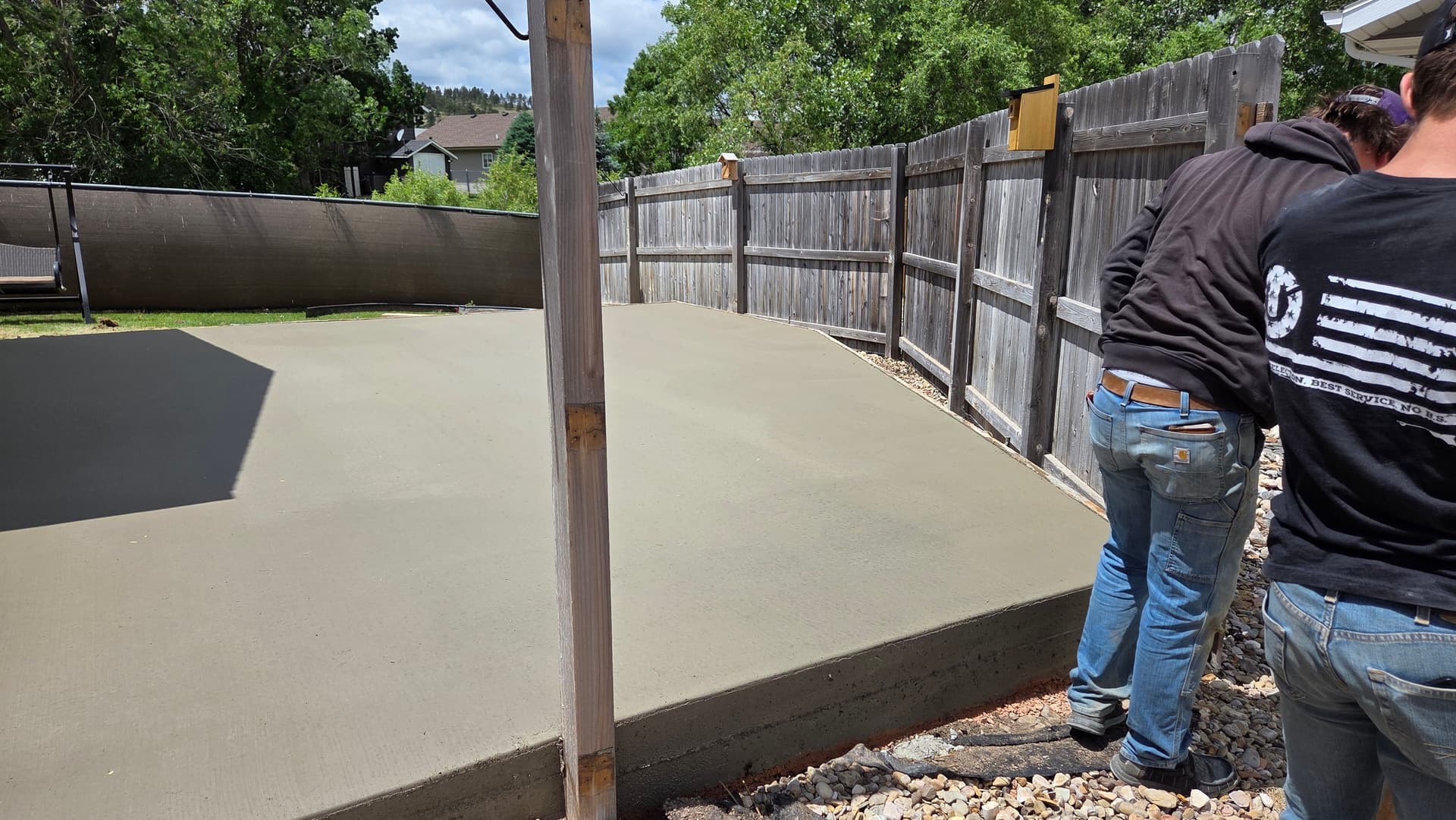
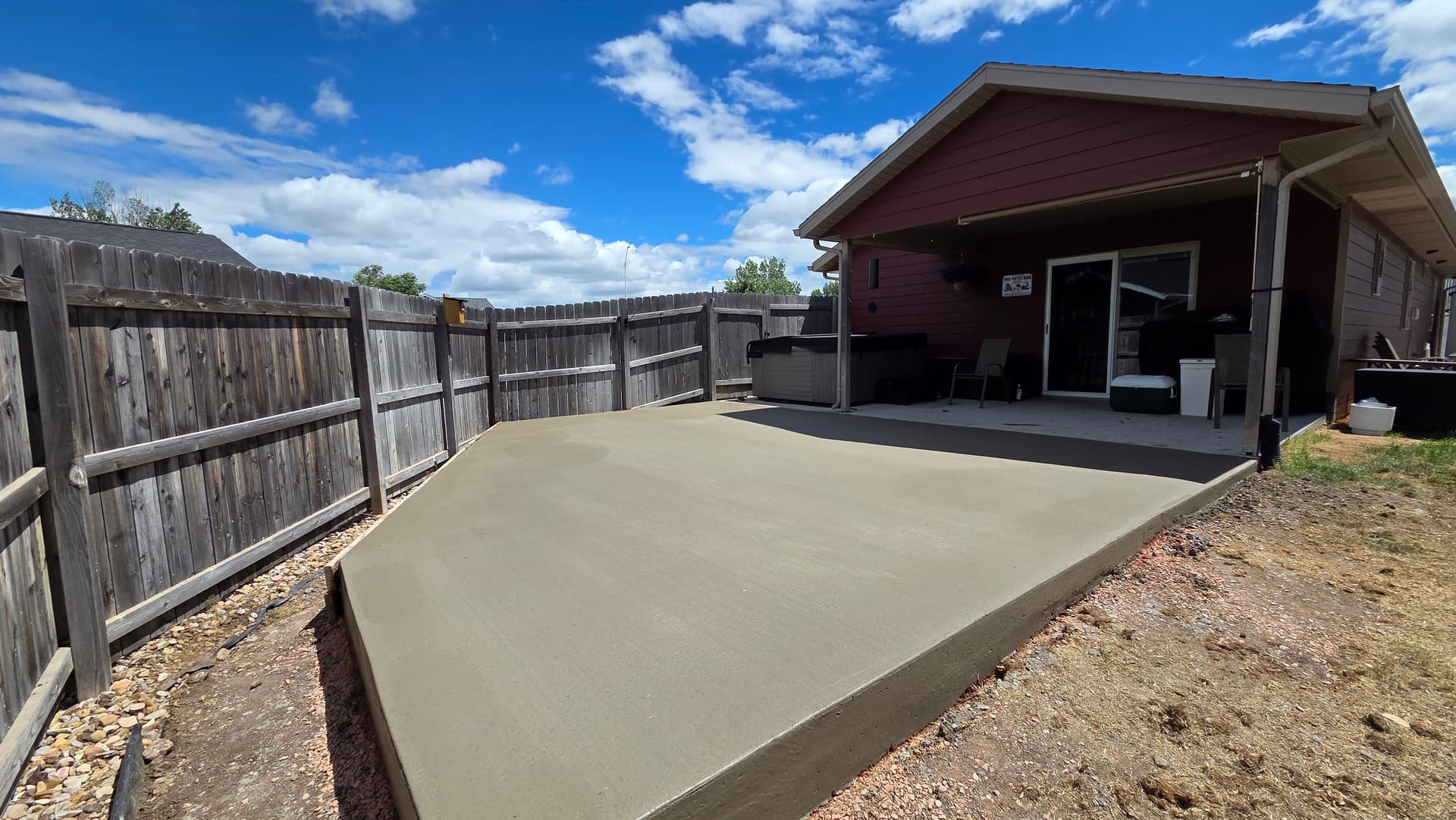
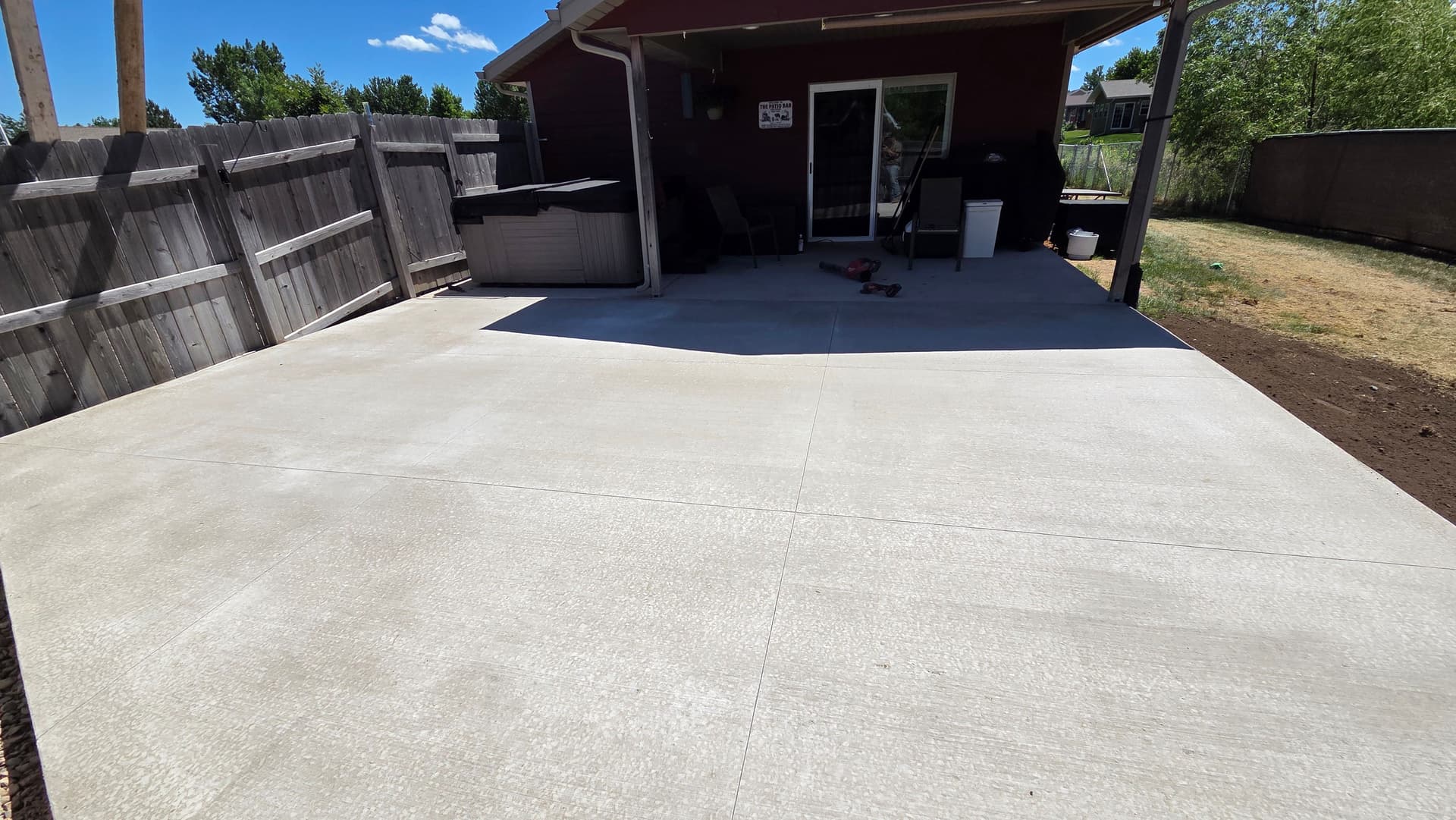
This backyard started as bare dirt - no slab, no usable space, nothing to work with. We stripped the topsoil, brought in compacted gravel as a solid base, and set up forms around the entire footprint. We even pulled fence panels to get equipment in and out without cutting corners on the prep work. That kind of access matters more than most people realize.
Here's the thing about a concrete pour - what happens underneath is just as important as the surface. A properly compacted gravel base keeps the slab from shifting or cracking down the road. Skip that step and you're rolling the dice on how long it actually holds up. We don't skip it.
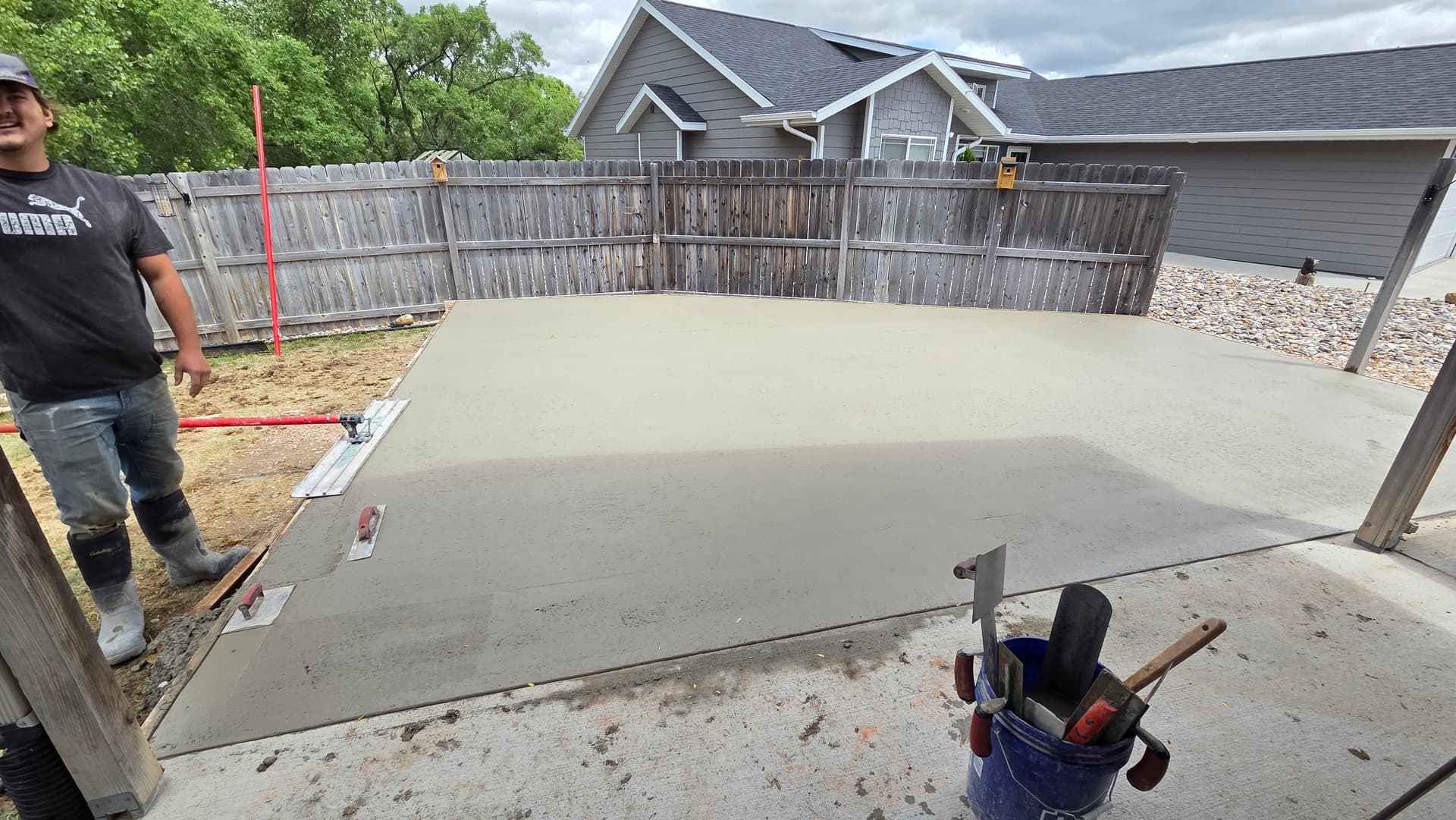
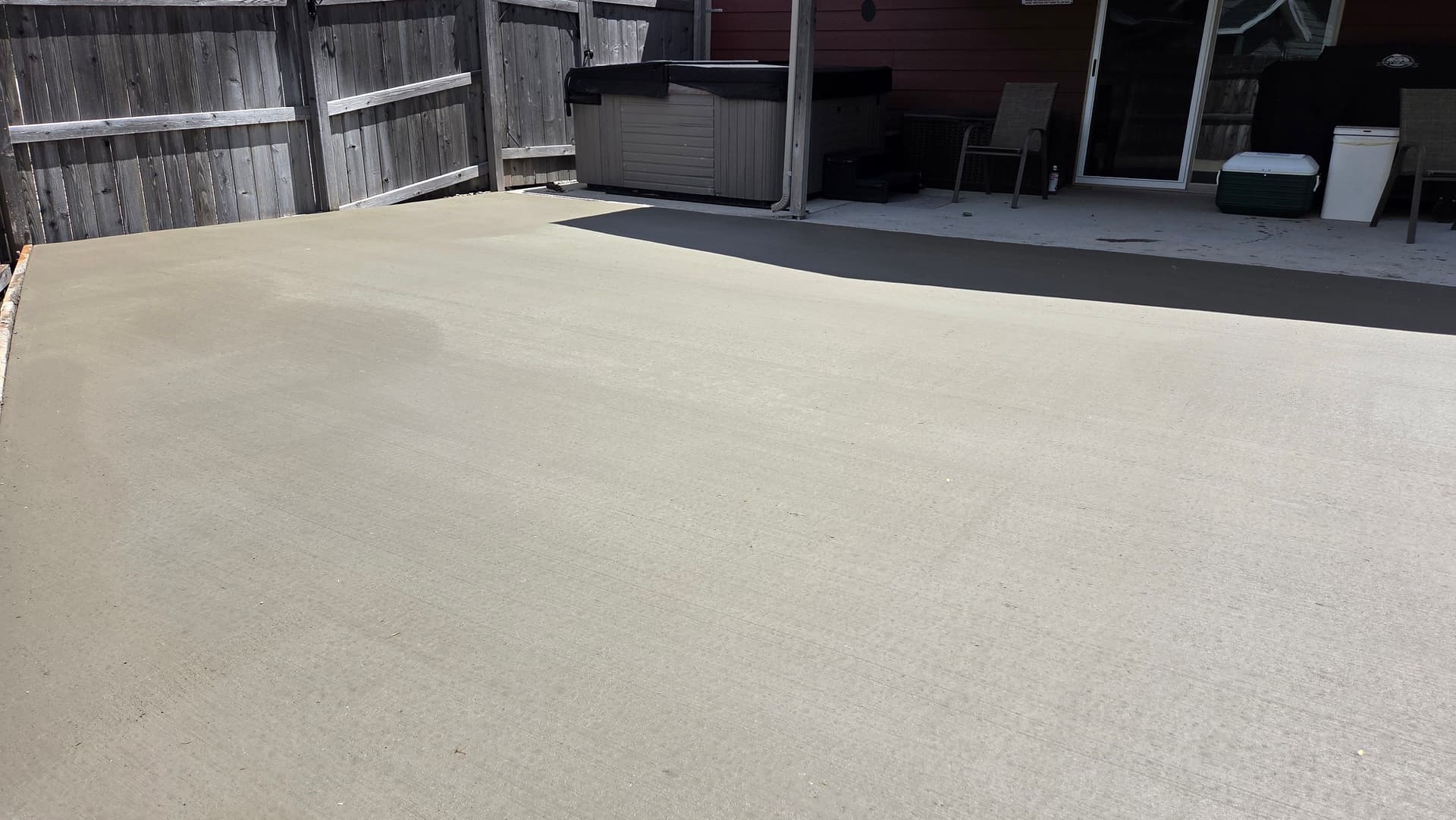
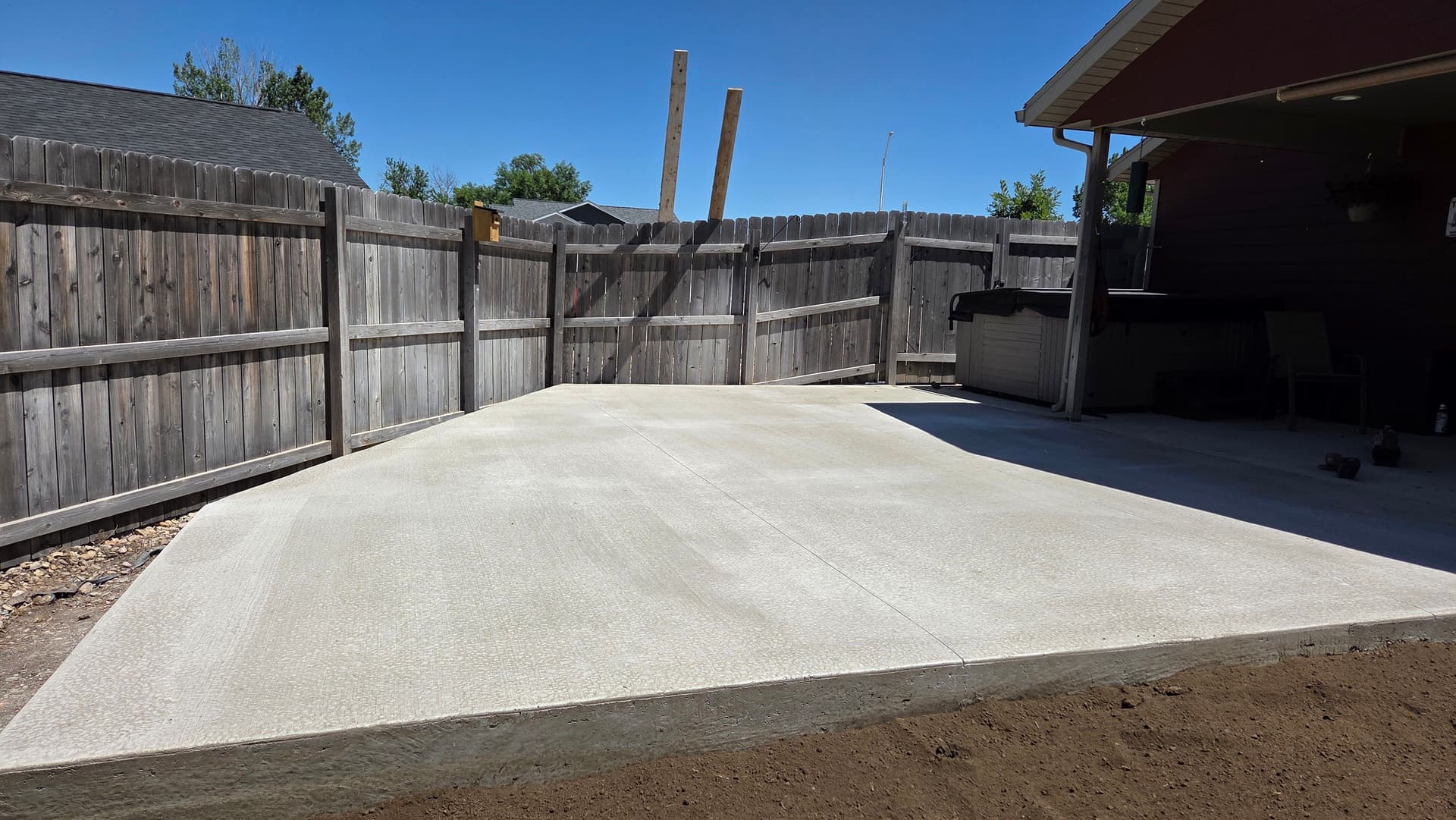
Once the pour was done, we finished the surface with a clean broom finish. That texture gives you traction underfoot without looking rough or sloppy. Then came the sawcuts - those straight lines you see running across the slab. They're control joints, designed to guide any natural cracking into a predictable, invisible line instead of letting it wander wherever it wants.
What you end up with here is a large, solid concrete patio that connects directly to the existing covered patio area. The new slab bumps the outdoor living space up significantly - enough room for a full outdoor setup, whether that's a seating area, dining space, or whatever the homeowner decides to put out there. That's the whole point of a concrete patio done right: it gives you a foundation to actually use your backyard.
Two days from start to finish, dirt to done. No shortcuts on the base, no mess left behind. This is the kind of work that holds up for decades - and looks clean while doing it.