Concrete Floor Pour for a Pole Barn Near Rapid City SD
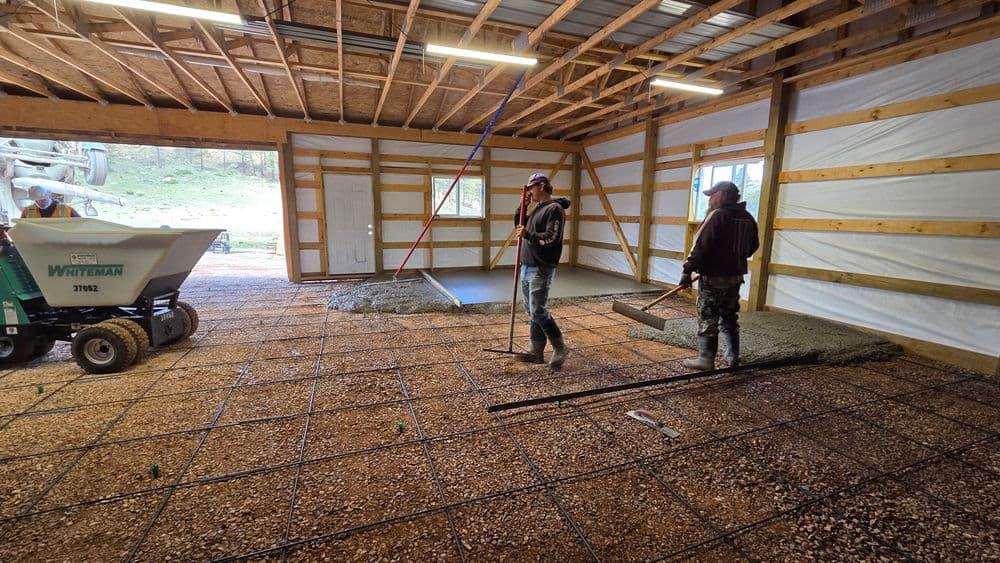
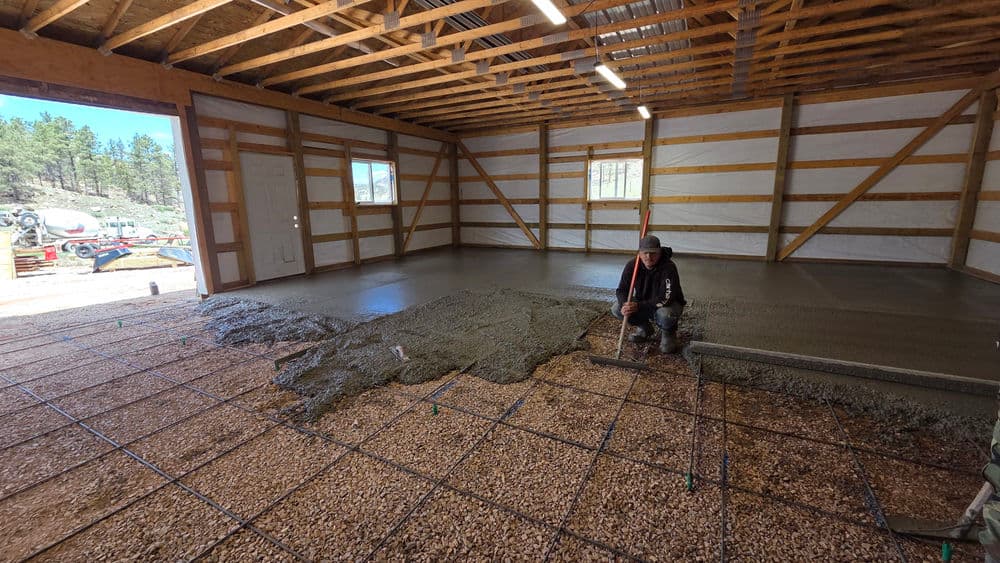
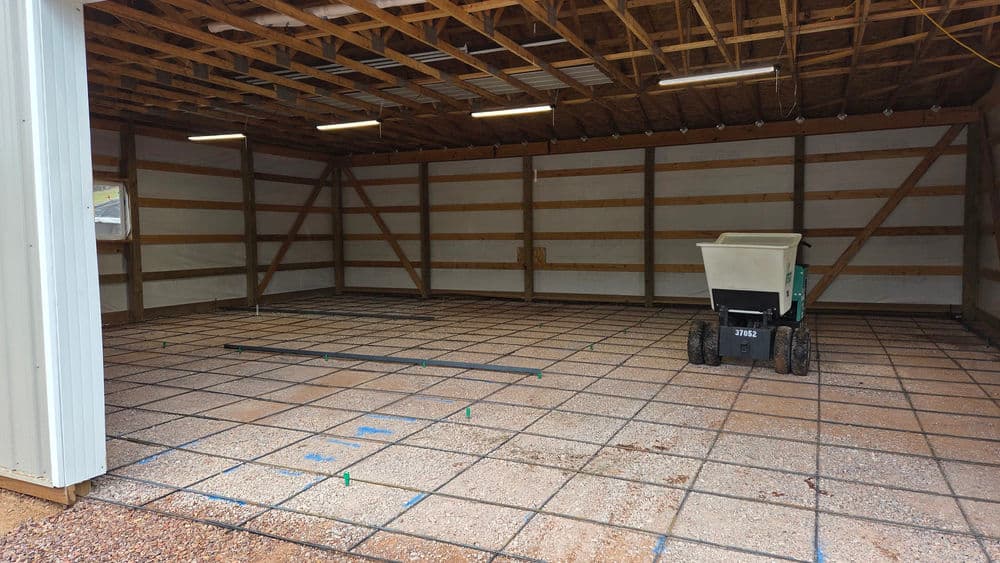
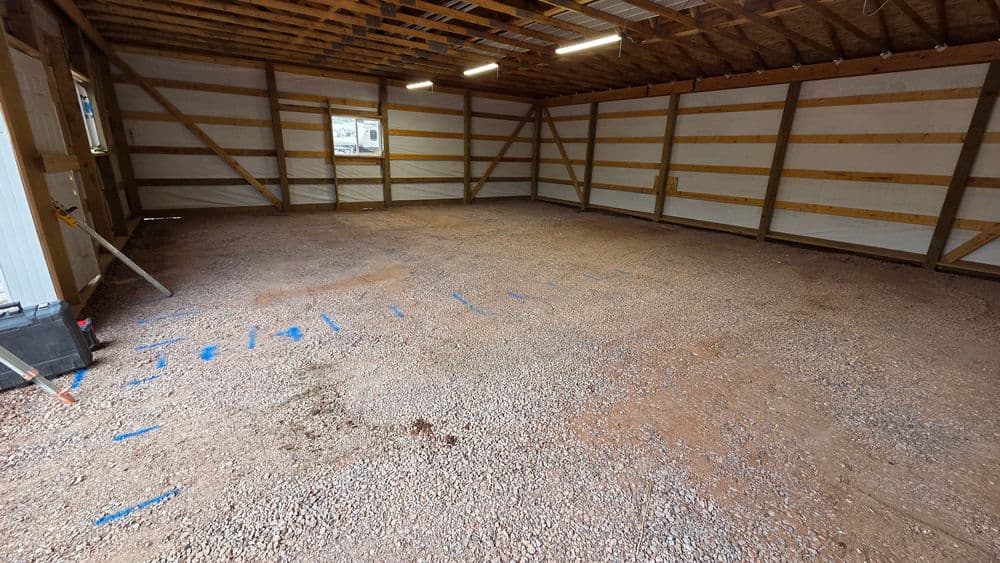
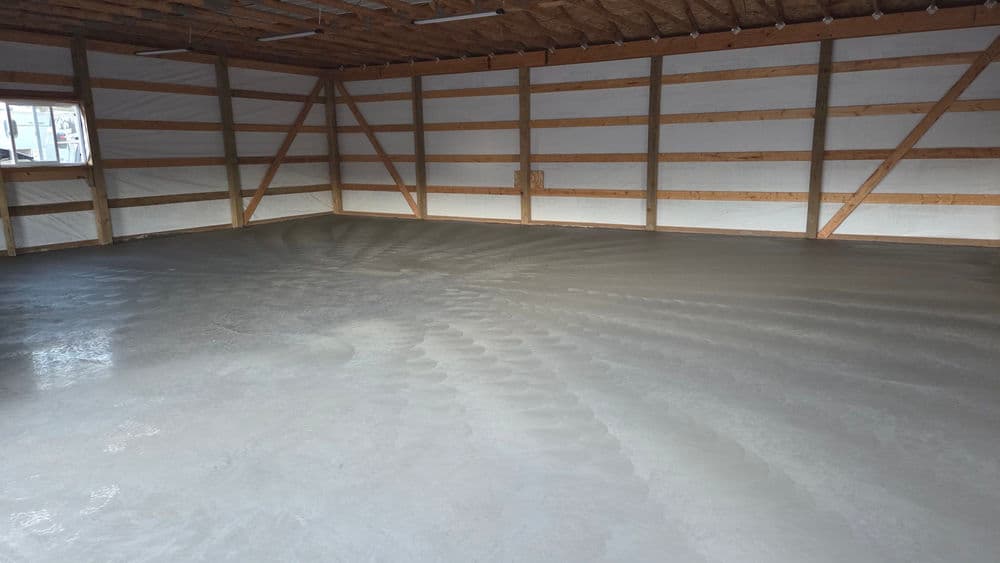
Here's what we were working with - a large pole barn with a gravel base and a full grid of rebar already laid out wall to wall. Before a single yard of concrete gets poured, that prep work matters more than most people realize. The rebar grid keeps the slab from cracking under load over time. The gravel base underneath helps with drainage and gives the concrete something stable to cure on. Get either of those wrong and you're dealing with cracked, shifting concrete years down the road.
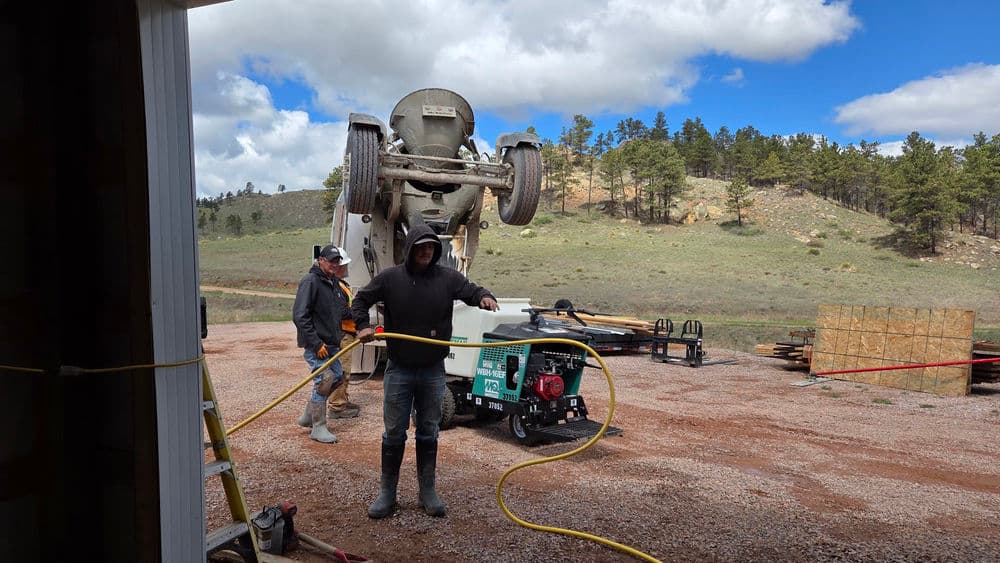
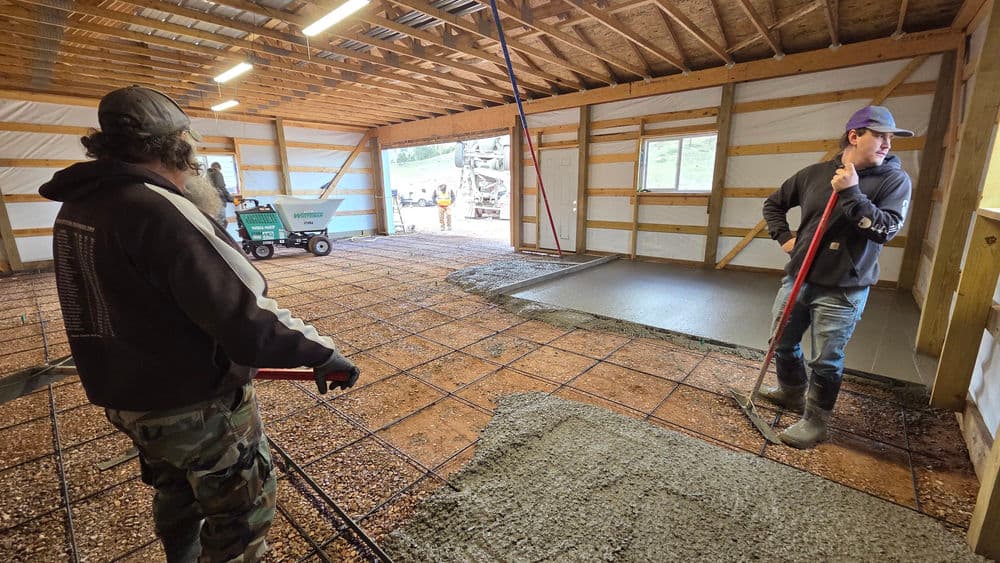
We brought in a ready-mix truck and used a Whiteman concrete buggy to move material efficiently across the full floor area. On a pour this size, speed and coordination matter. Concrete doesn't wait. The crew worked section by section - spreading, screeding, and leveling as they went - making sure everything stayed consistent from one end of the building to the other.
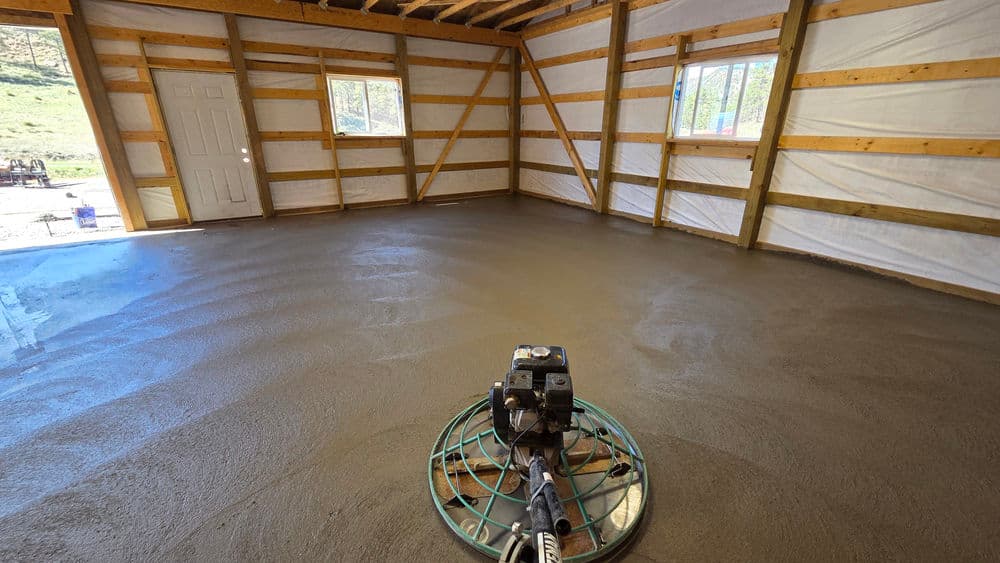
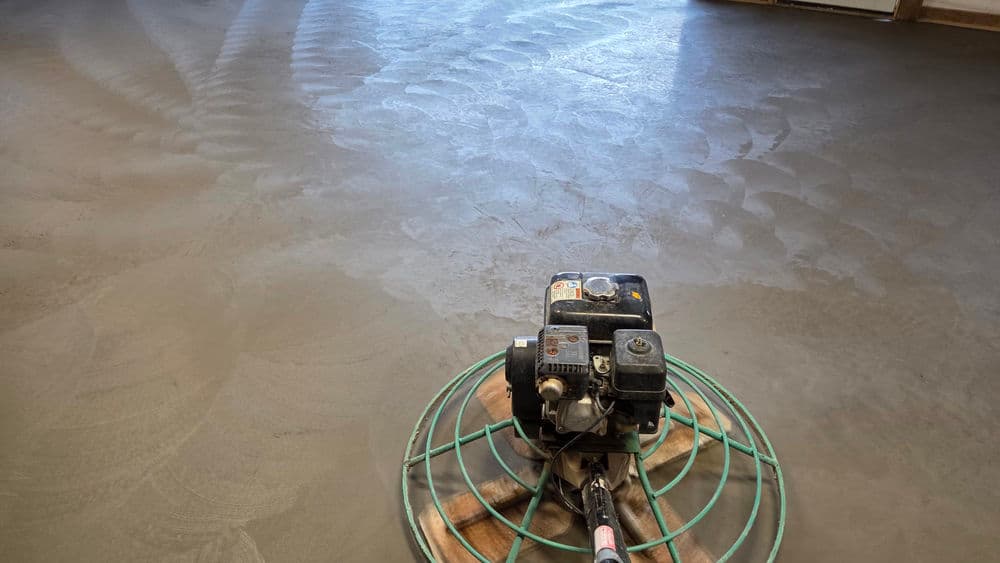
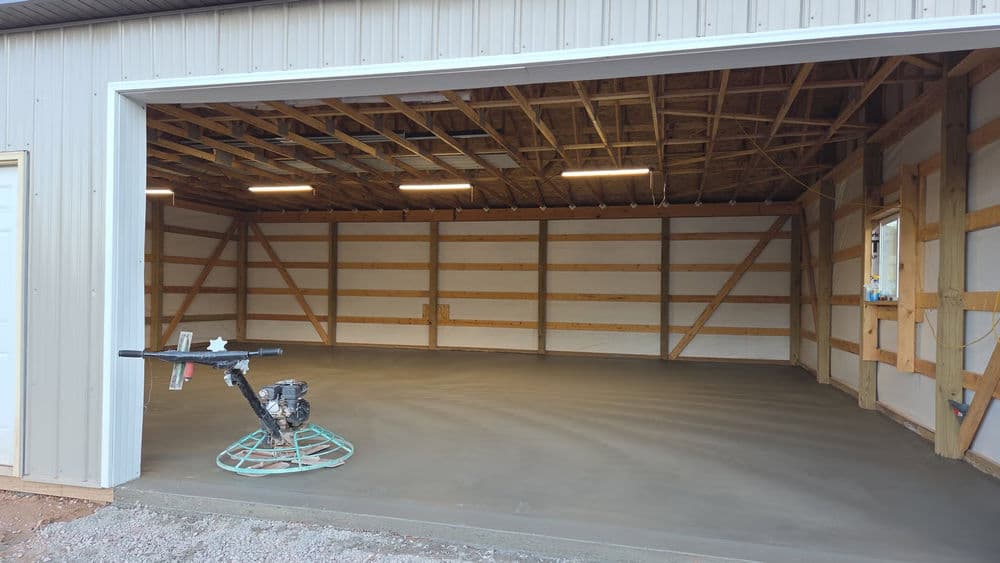
Once the concrete was down and the surface water had bled off enough, we ran the power trowel over the whole floor. That machine is what gives you a smooth, hard finish instead of a rough, porous surface. It compresses the top layer of the concrete, which makes it more durable and a lot easier to keep clean. For a shop or storage building, that finish makes a real difference in day-to-day use.
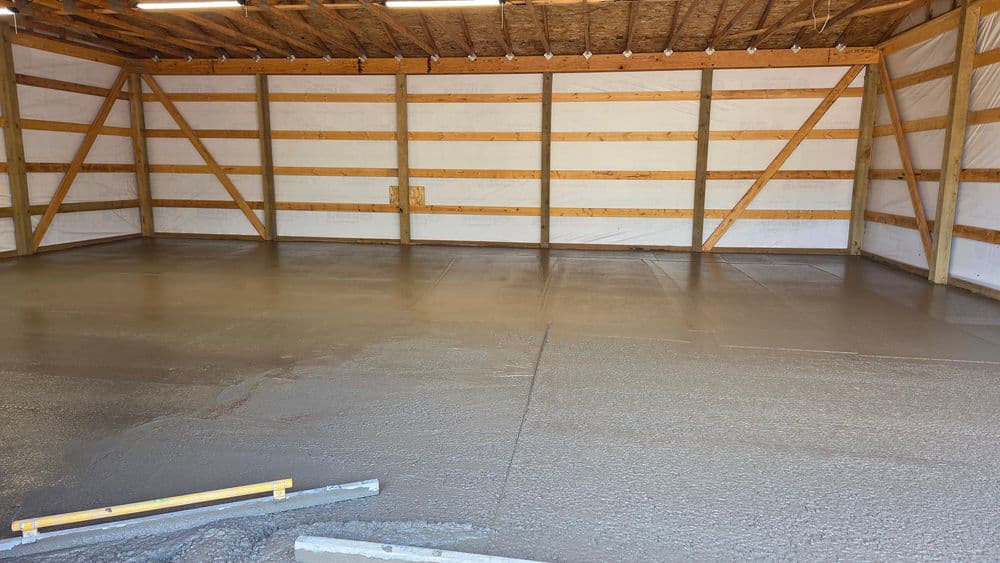
The end result is a tight, flat slab across the full footprint of the building - ready for whatever this owner has planned next. Whether it's equipment storage, a workshop, or just keeping the space dry and usable year-round, a properly reinforced and finished concrete floor is the right foundation for it. We do this kind of work all around the Rapid City area and the Black Hills, and we take the same approach every time - prep it right, pour it right, finish it right.