Concrete Foundation and Slab Pour Near Pactola Lake
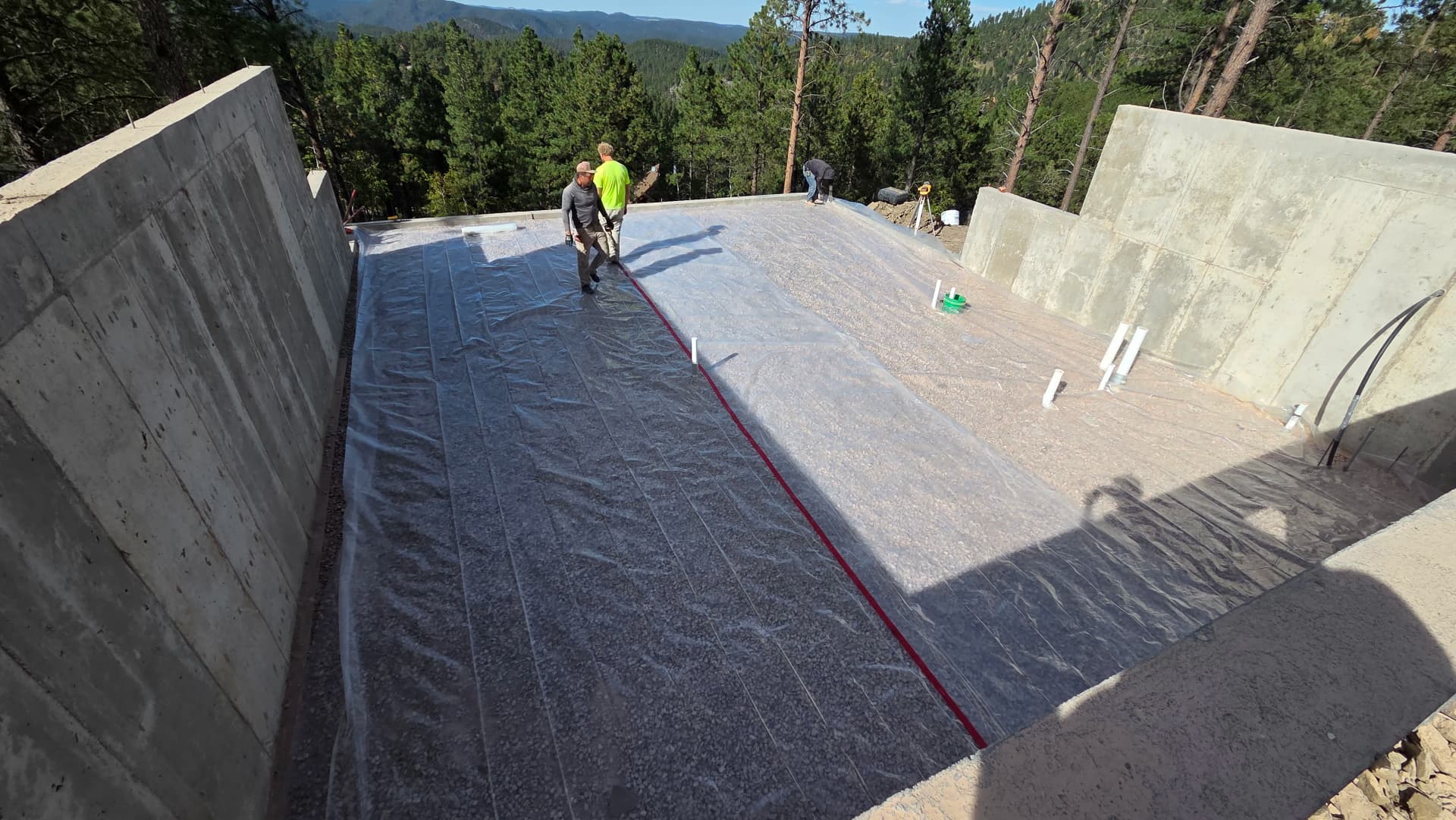
Building in the Black Hills is not like building anywhere else. Steep terrain, tight access, and rugged hillside lots mean most jobs up here require more planning before a single yard of concrete ever gets poured. This one near Pactola Lake was exactly that kind of job.
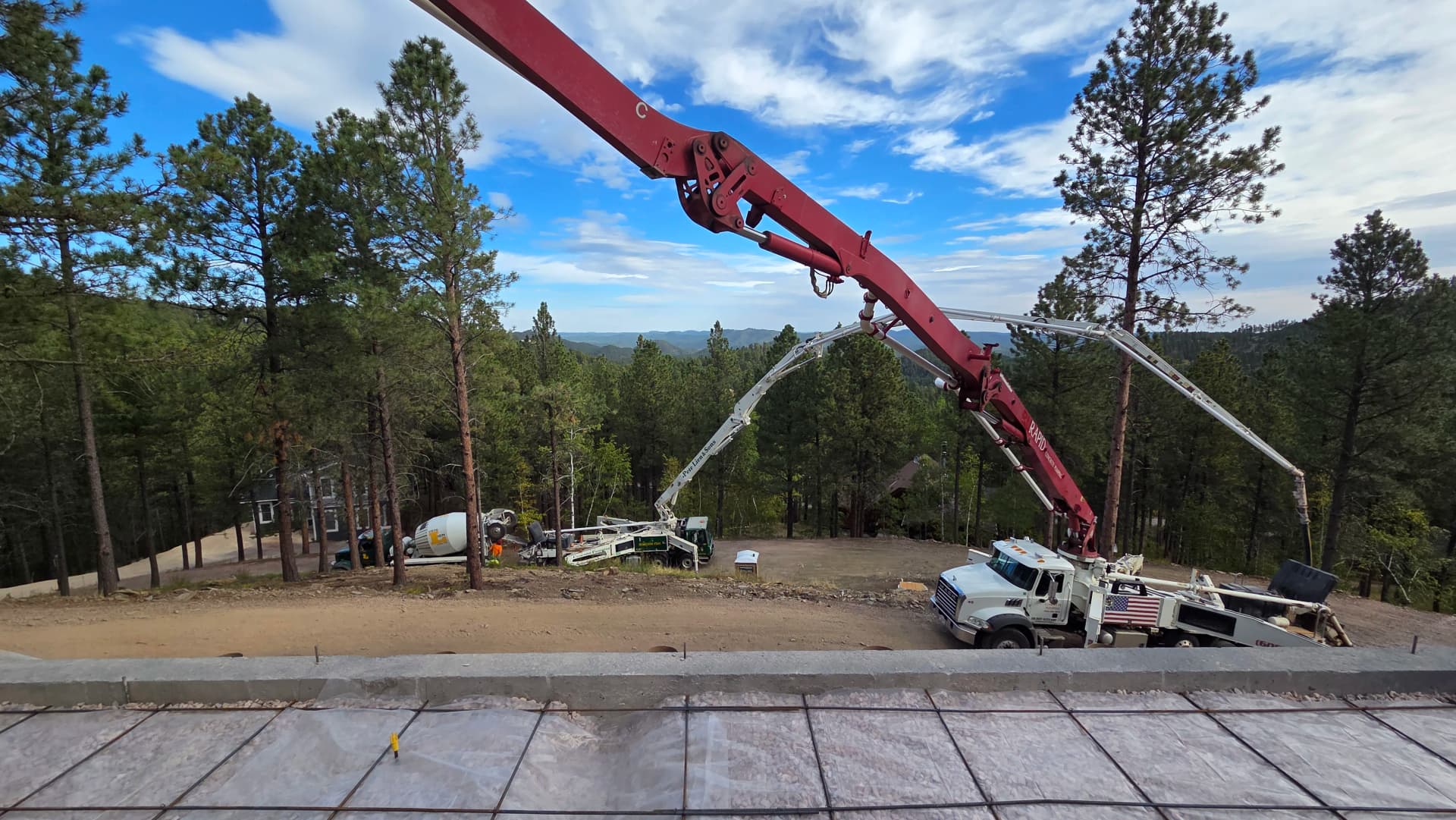
The site sat high on a hillside with limited truck access down to the pour area. Getting concrete in there the normal way wasn't an option. So we planned around it - bringing in two pump trucks to reach the foundation from below and boom the concrete up and over. You can see both booms stretched out above the treeline, working together to keep the pour moving. That kind of coordination doesn't just happen on the fly. It takes experience to set that up and pull it off without losing time on the slab.
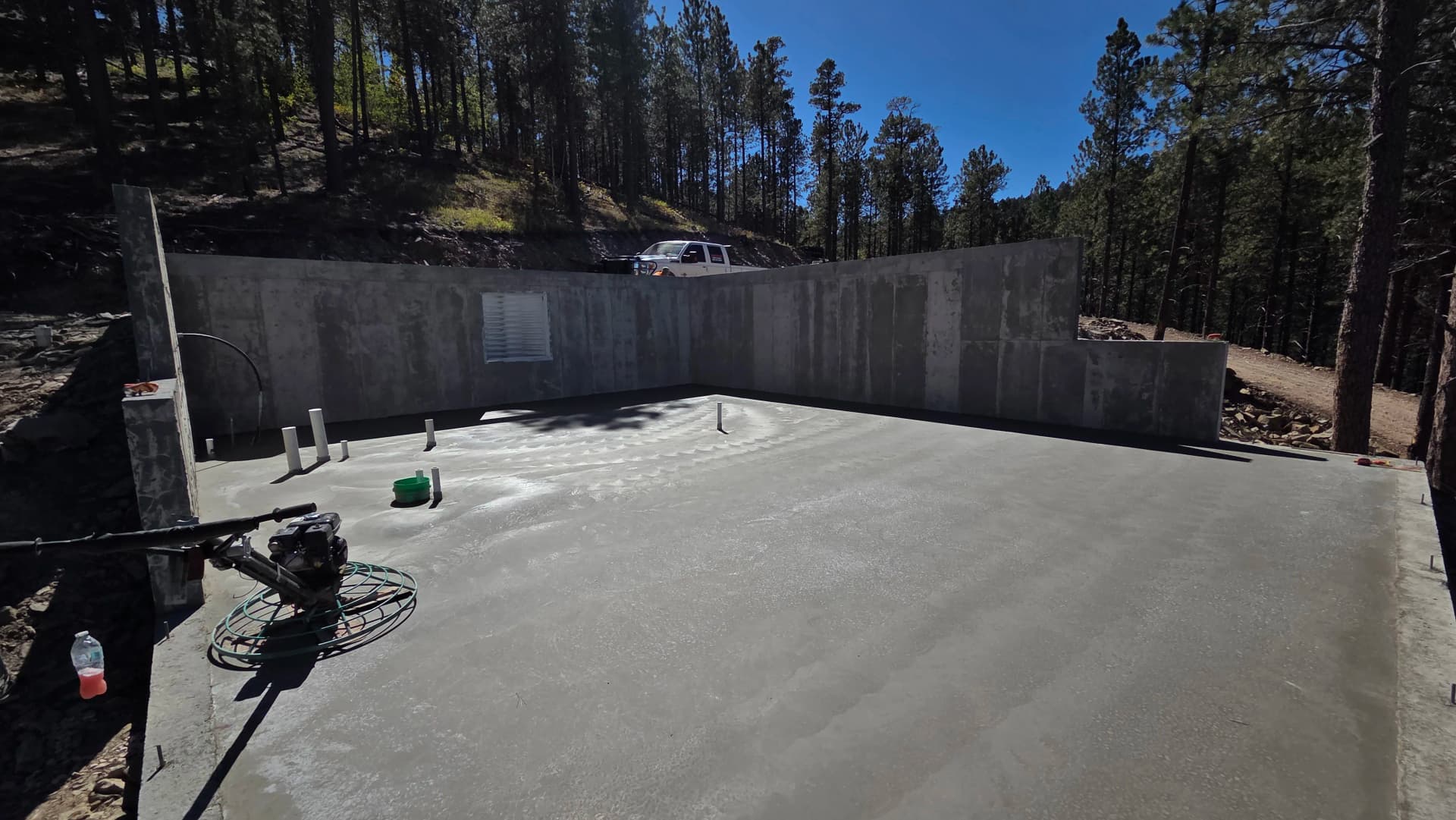
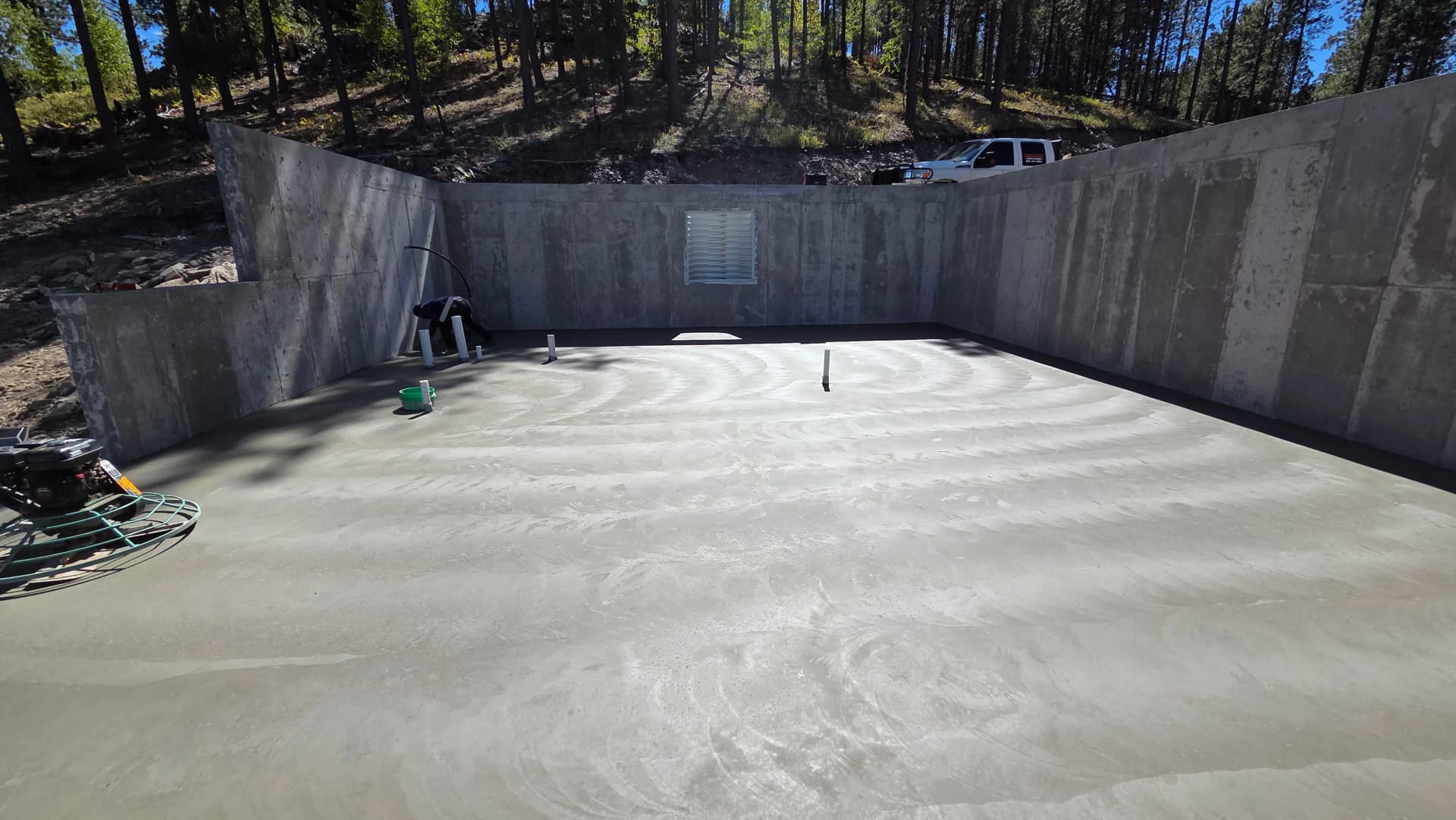
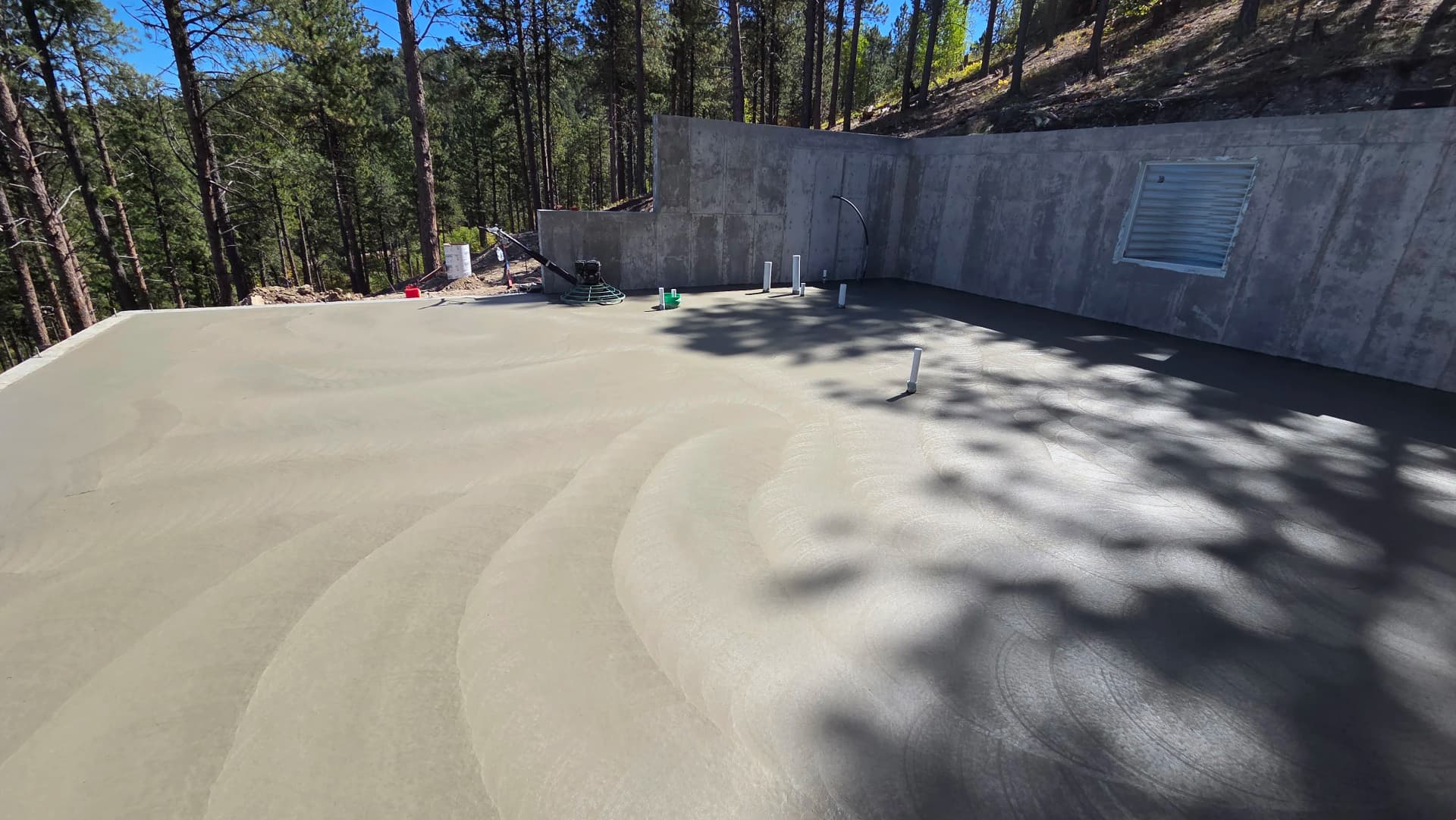
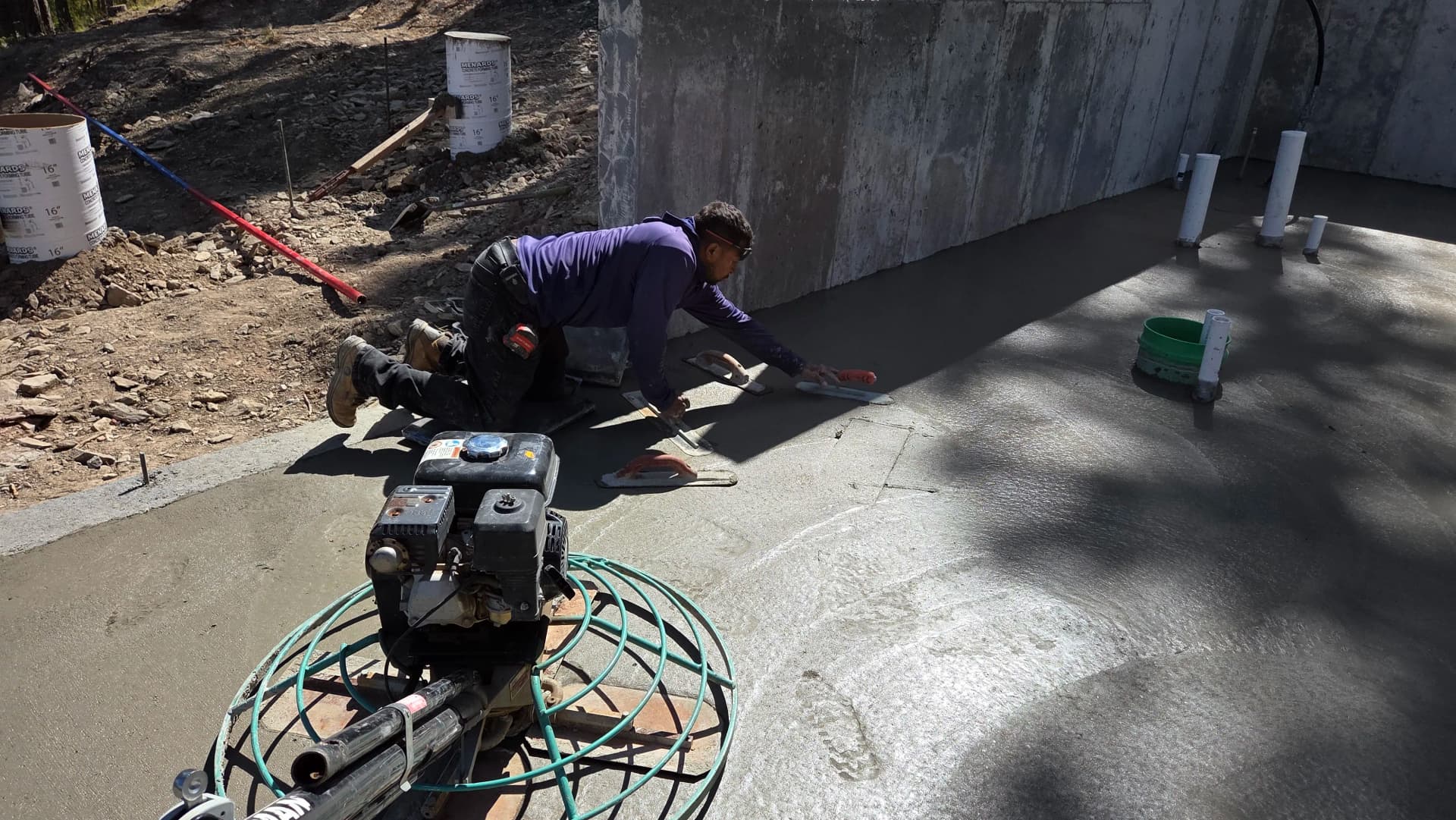
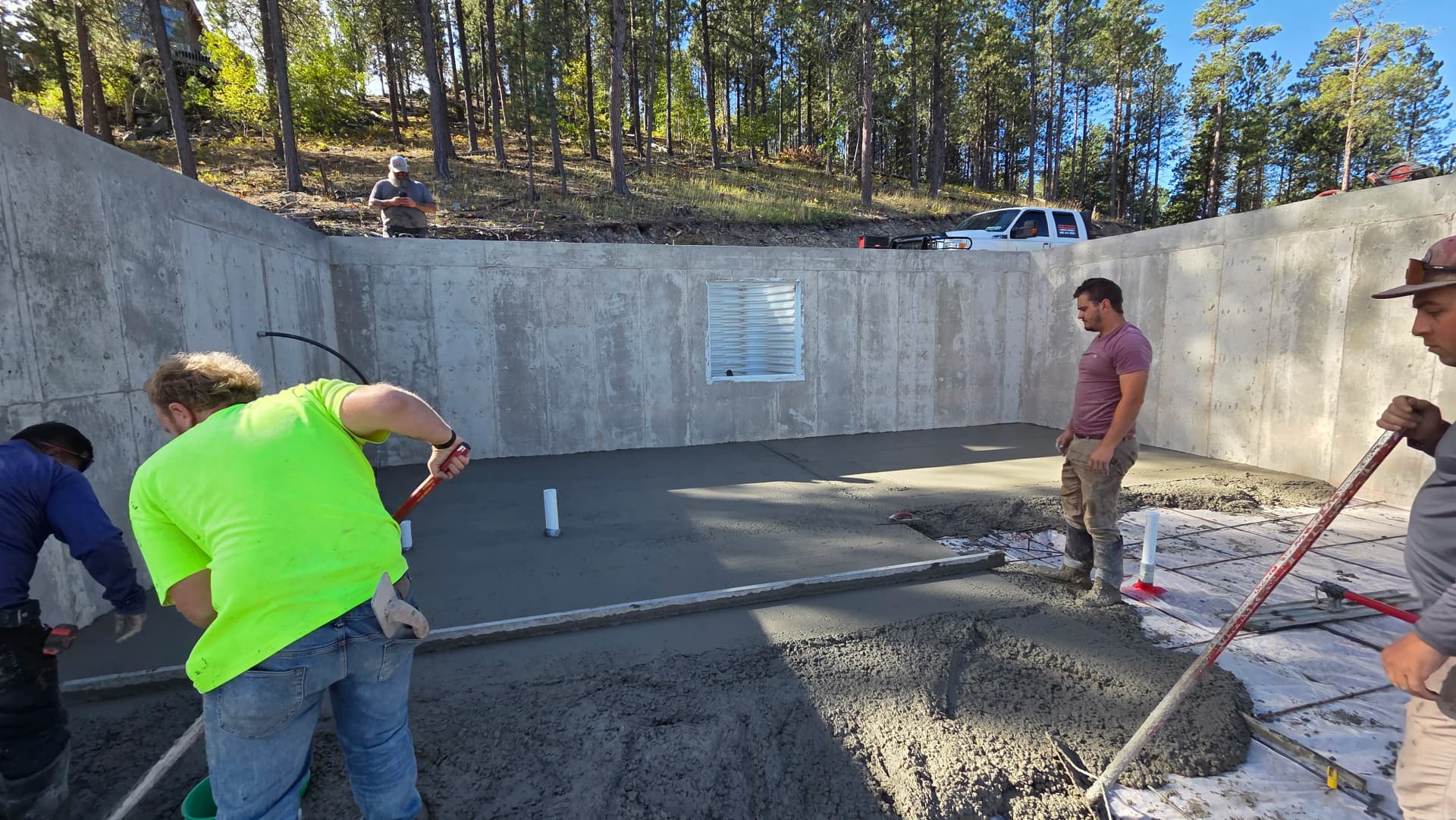
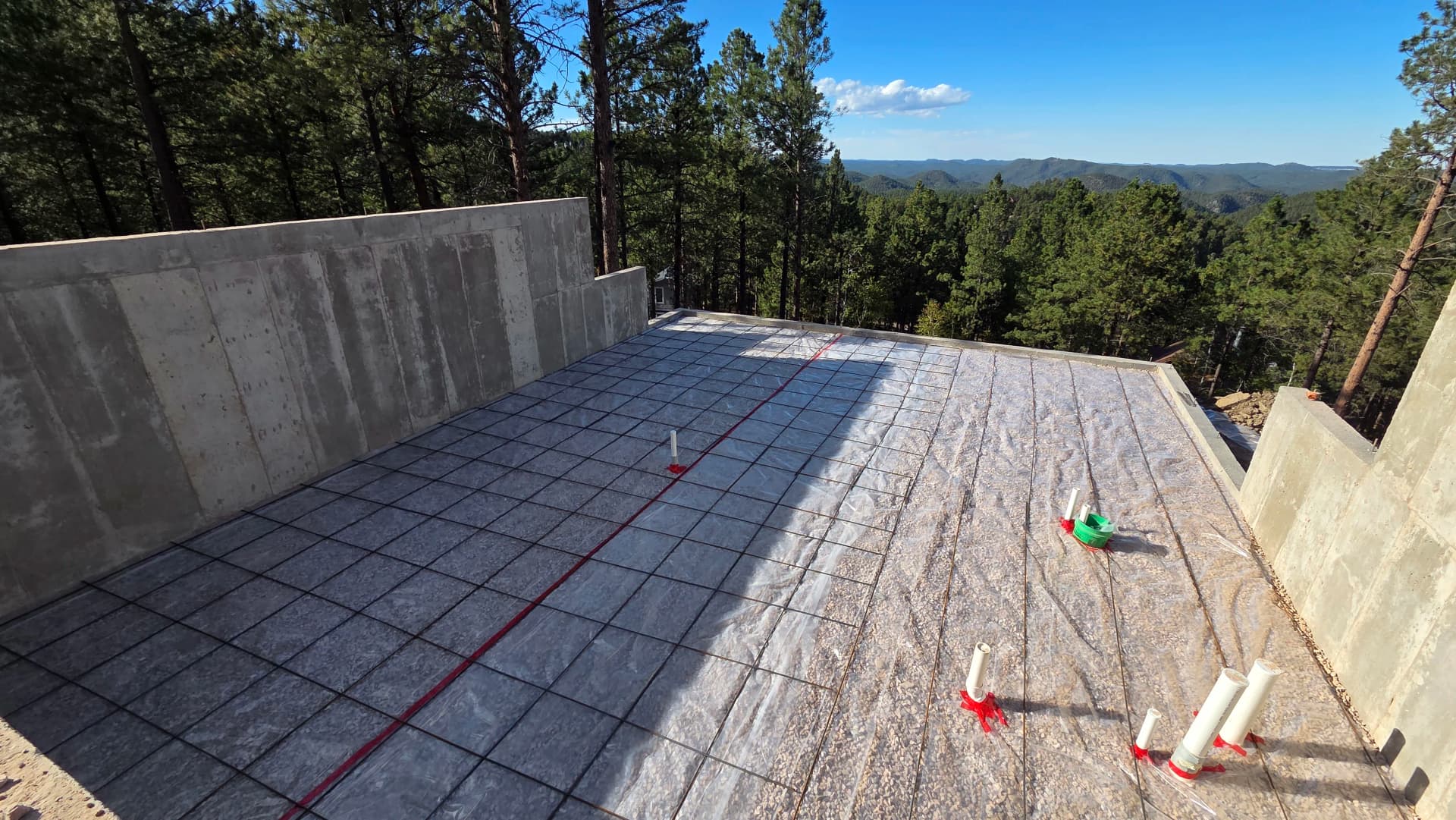
Once the concrete was flowing, the crew got to work. The rebar grid and vapor barrier were already staged and ready to go. Our guys spread, screed, and finished the slab in sections, using a ride-on power trowel to get the surface right. Hand troweling along the walls and edges where the machine can't reach - that detail work matters just as much as the big picture.
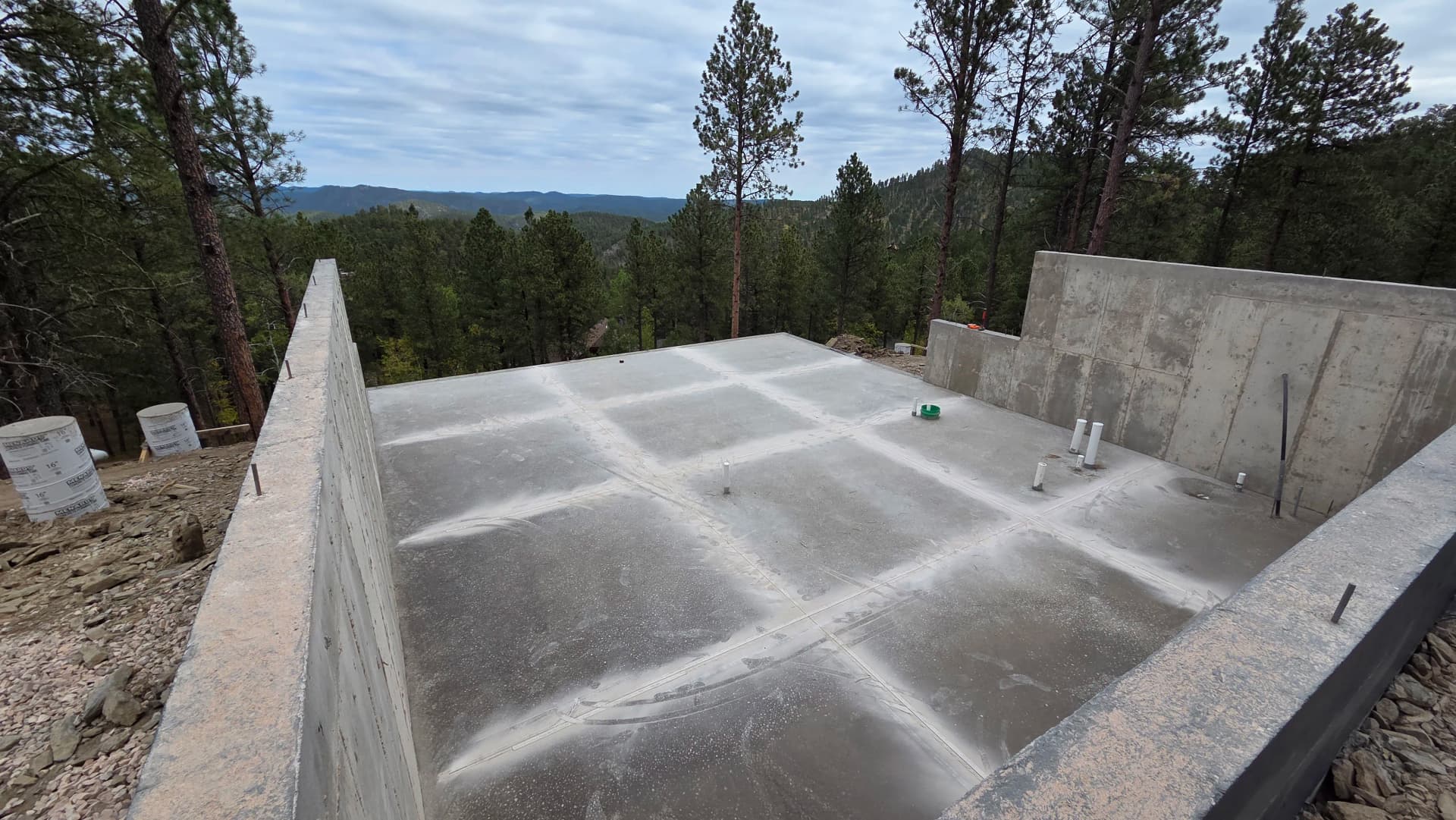
What you end up with is a clean, level slab inside solid poured concrete foundation walls. Control joints cut across the full surface. Plumbing rough-ins stubbed up exactly where they need to be. That's the foundation the rest of this build stands on - literally. Getting it right here means everything above it goes up straighter, faster, and with fewer headaches down the line.
Not every site is easy. Some of the best builds in the Black Hills are on the hardest lots to work. We're set up to handle that - the equipment, the crew, and the problem-solving that remote and hillside concrete work actually requires.