Crawlspace Sump Pit Install at Ft. Meade VA - No Shortcuts
Some jobs look simple from the outside. This one was anything but. We were back at Ft. Meade VA finishing up a crawlspace sump pit install - and from the first shovel in the ground to the last yard of concrete placed, every step of this job had to be done the hard way.
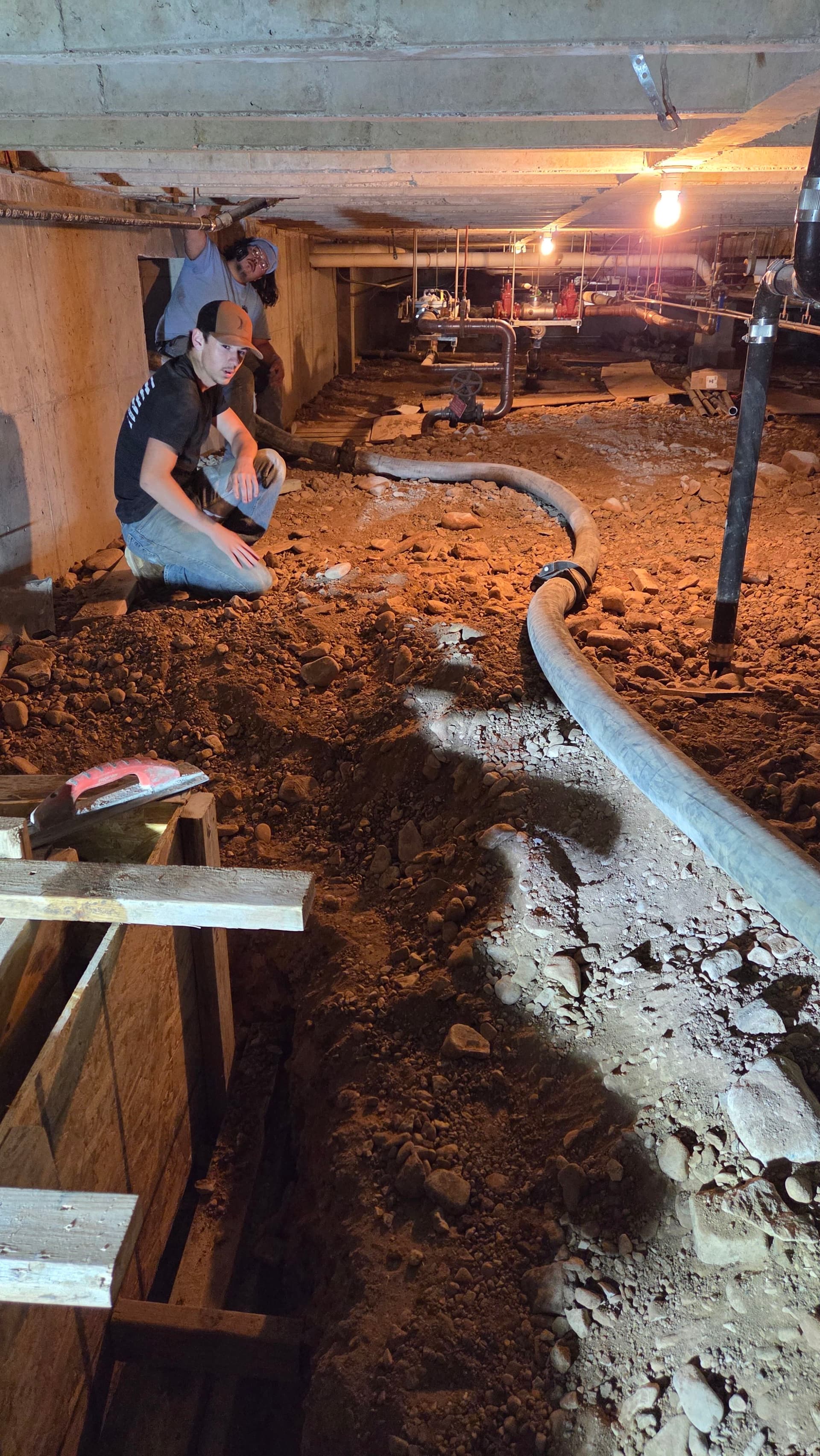
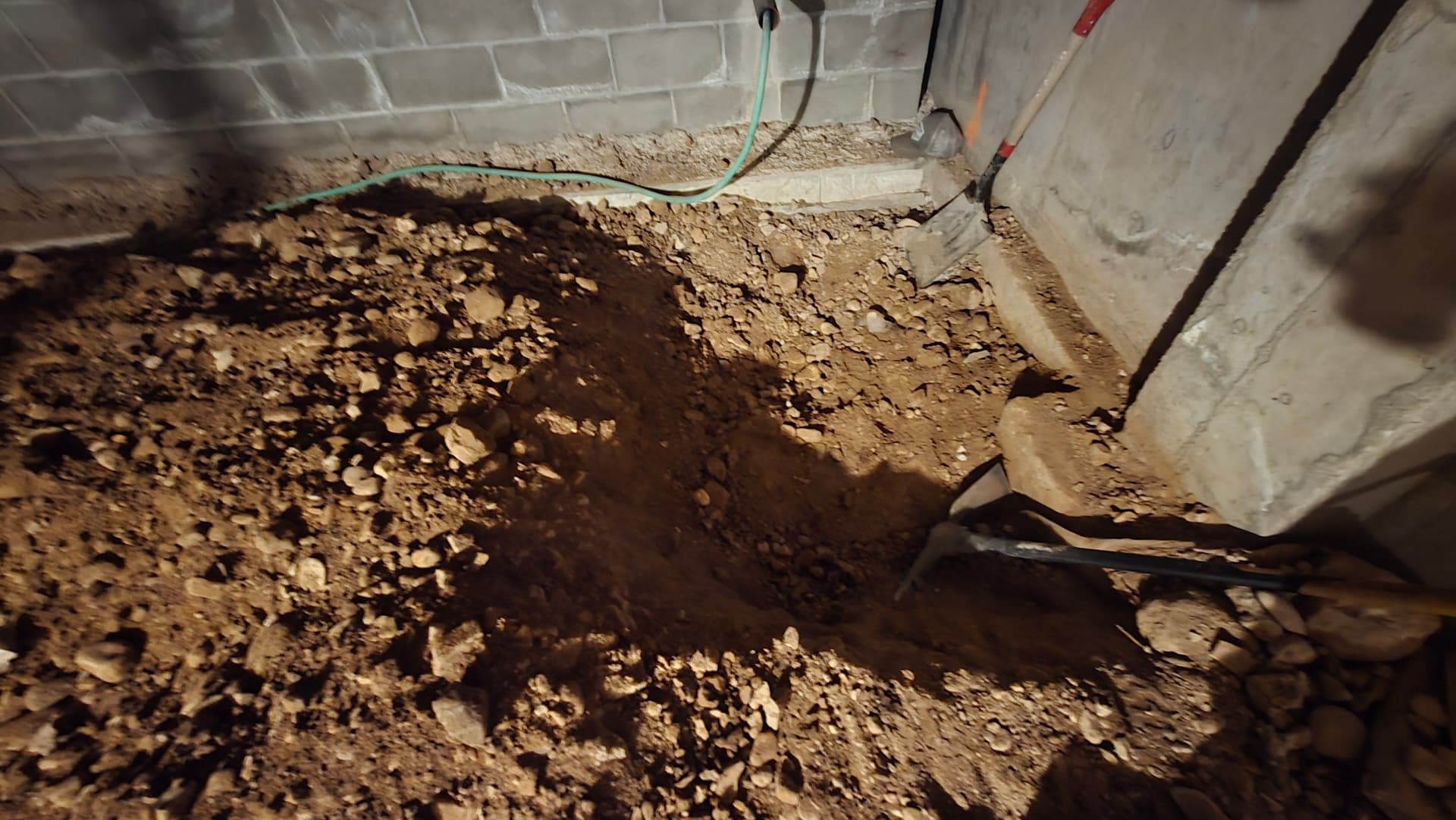
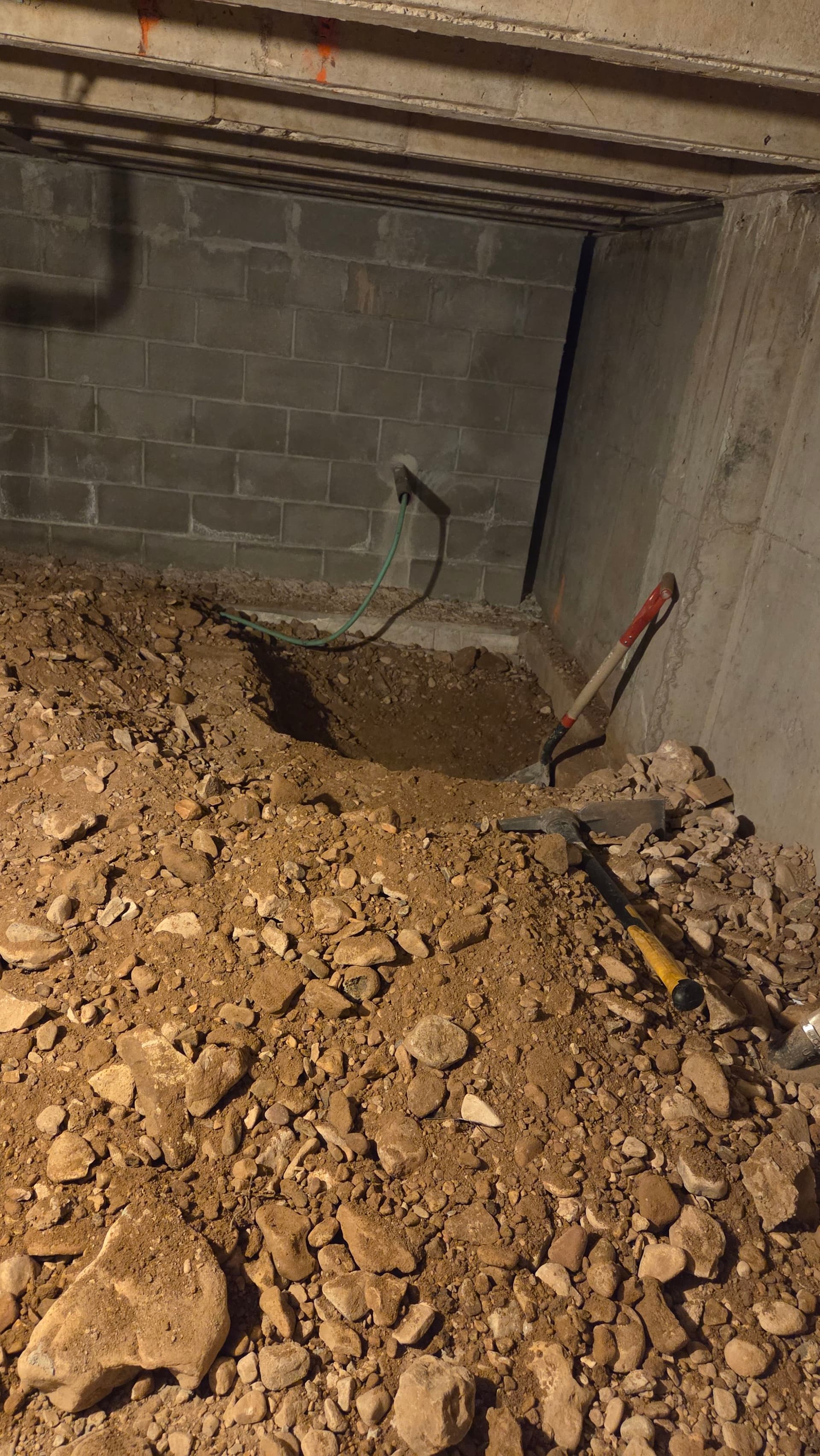
No heavy equipment fits in a crawlspace. That means every bit of digging was done by hand. Shovels, pickaxes, and a crew willing to get in there and do it right. The soil was rocky and dense, which makes hand digging slow and physical work. But that pit has to be excavated clean and square before any forming or concrete work can happen - and we weren't cutting corners on that.
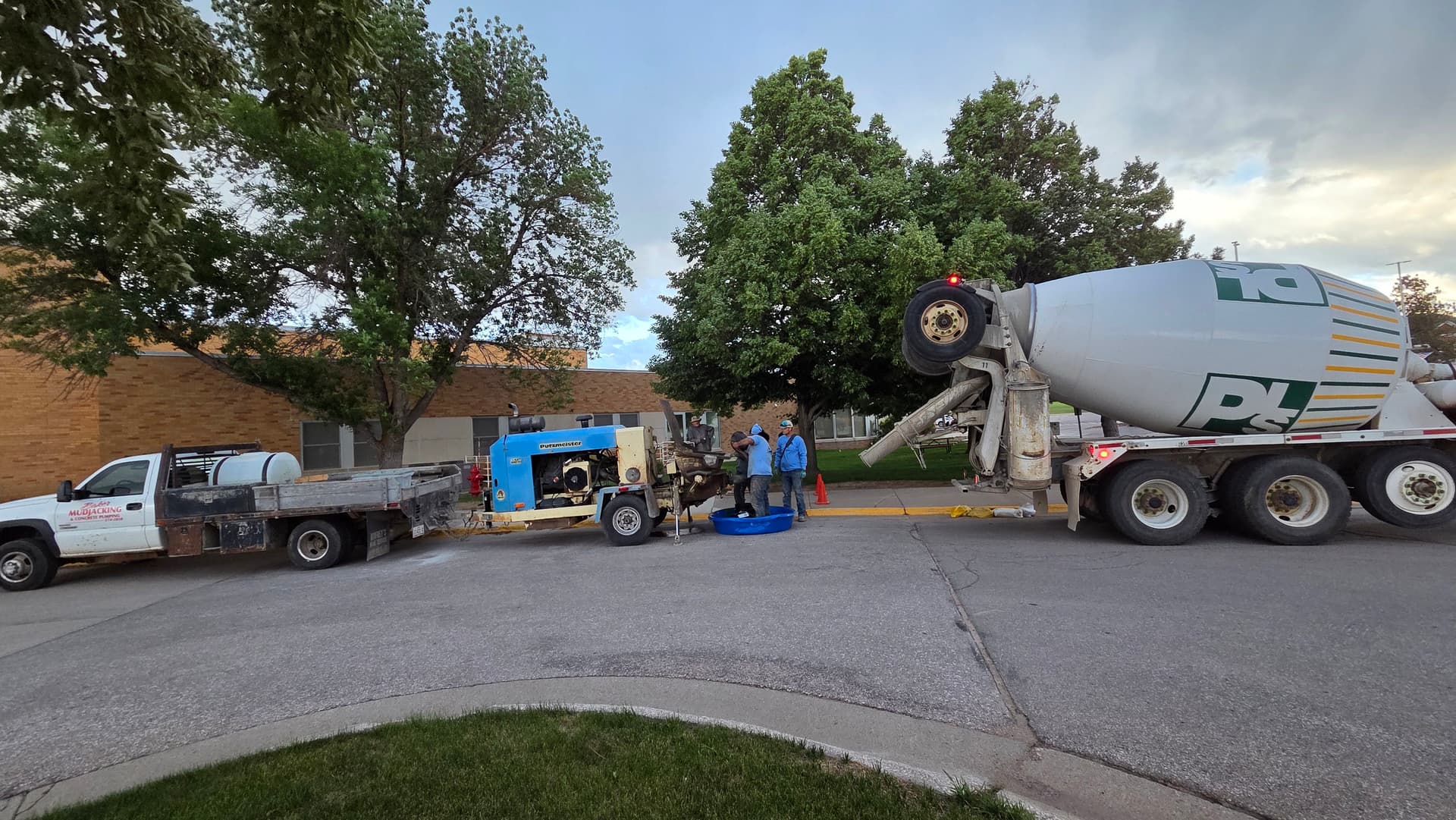
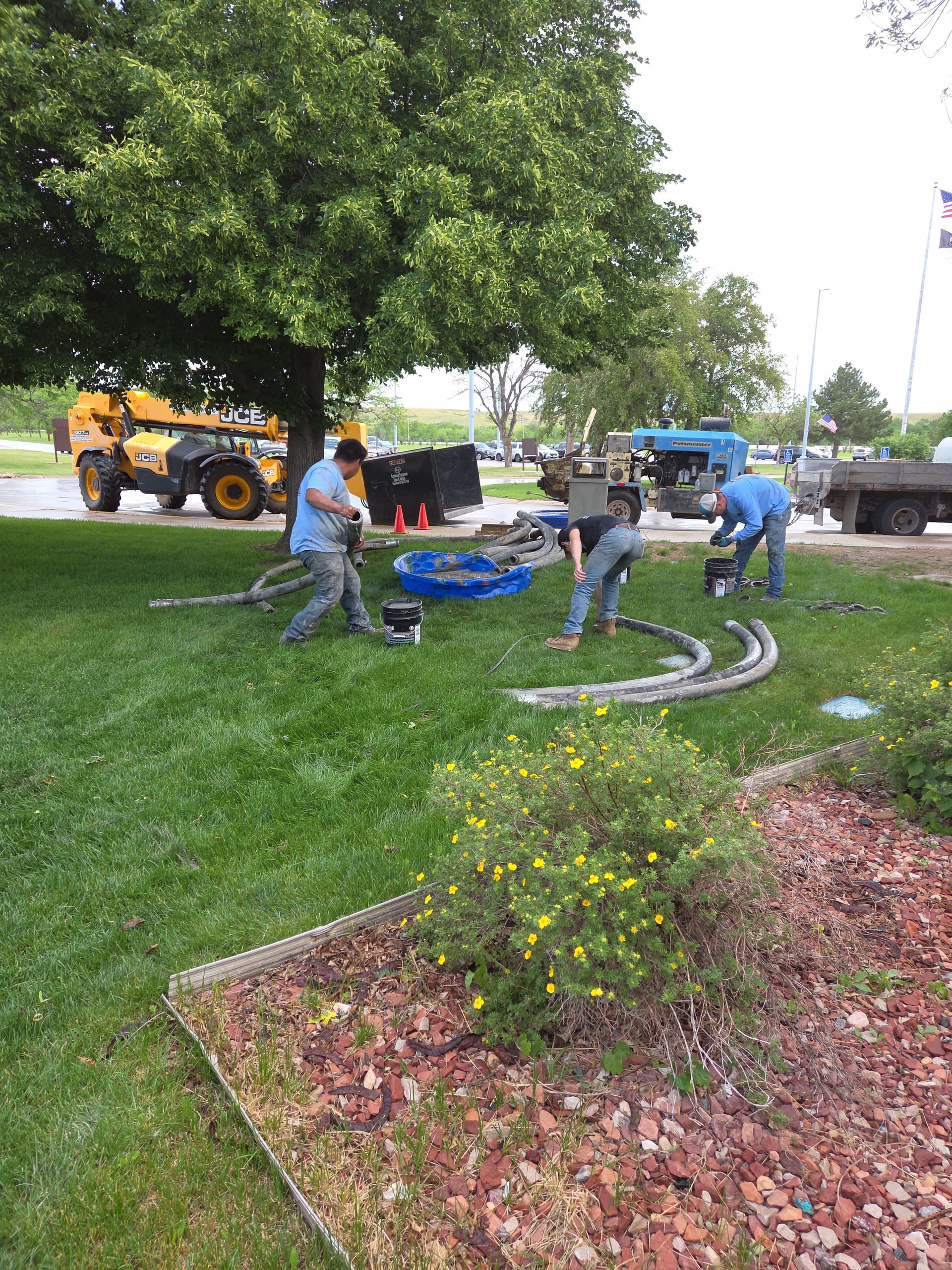
Getting concrete into a space like this is its own challenge. The mixer truck can't exactly back up to a crawlspace hatch. So we ran the pump line over 200 feet out to reach the pour location. That's what a concrete pump is for - it pushes material through a hose to wherever you need it, even when the access point is far from the truck. The Putzmeister pump we ran on this job handled the distance without a problem.
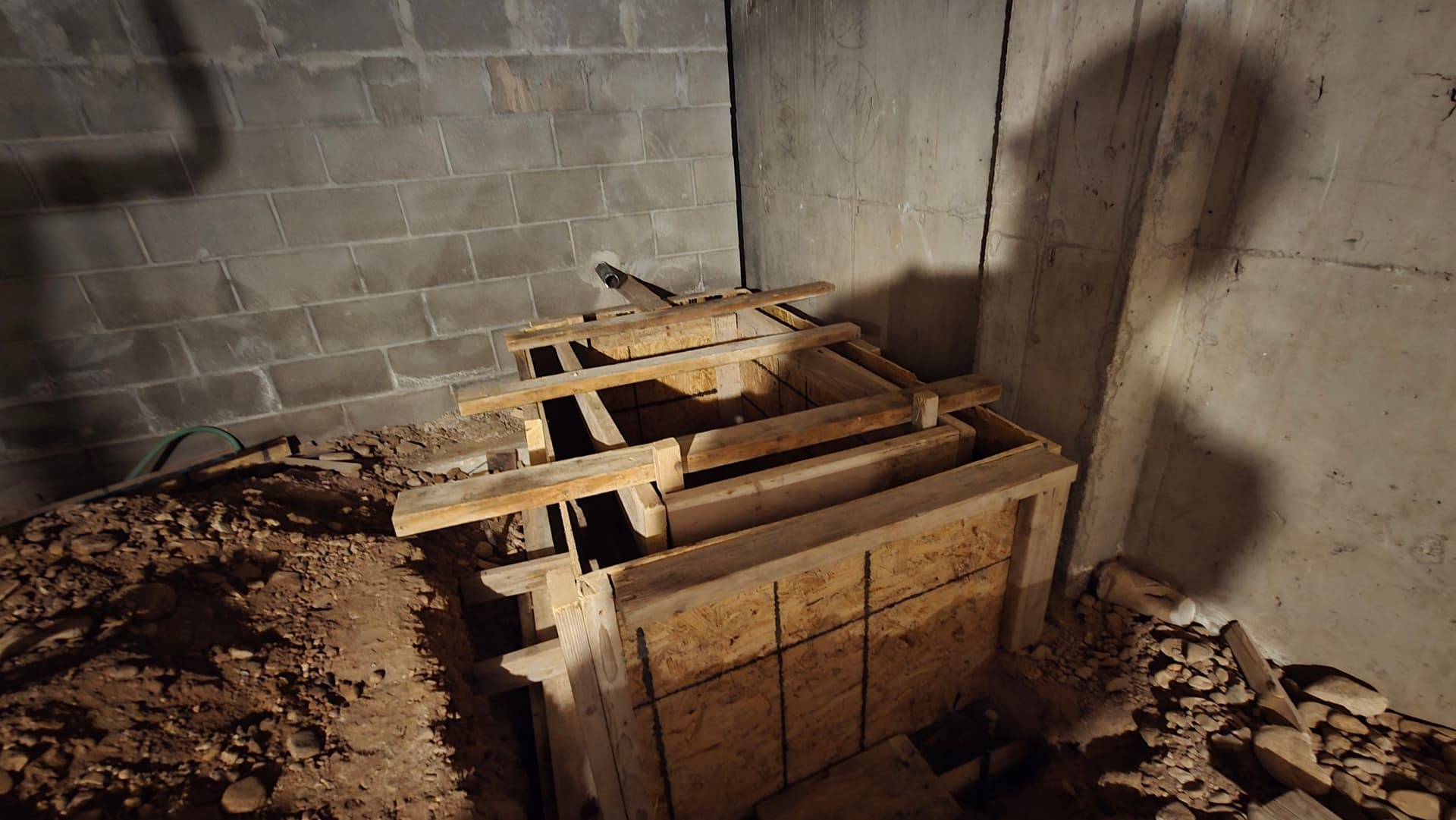
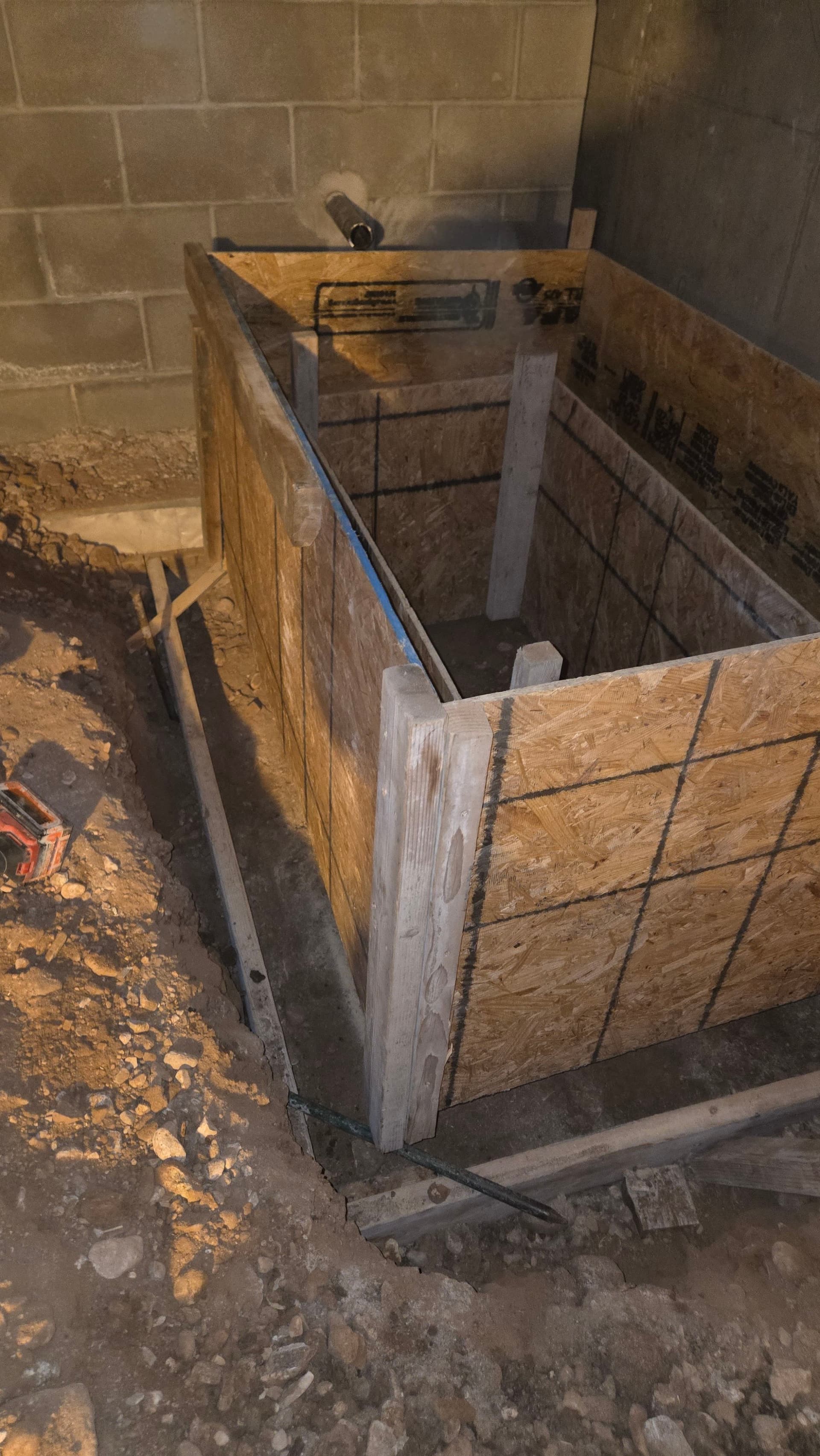
The forming work is where the sump pit really takes shape. You can see the wood forms built tight against the block wall, with rebar tied in for structural integrity. That form has to hold concrete pressure from the inside out, so the bracing has to be solid. Once the concrete is placed and cured, those walls become the permanent pit structure that the sump pump sits in and does its job for years.
Water control under a building like this isn't optional - it's a long-term investment in the structure itself. A properly installed concrete sump pit keeps groundwater managed and protects everything above it. It's not glamorous work, but it's the kind of job that matters. And we take that seriously every time we show up.