Rebar-Reinforced Thickened-Edge Slab Poured in Hot Springs SD
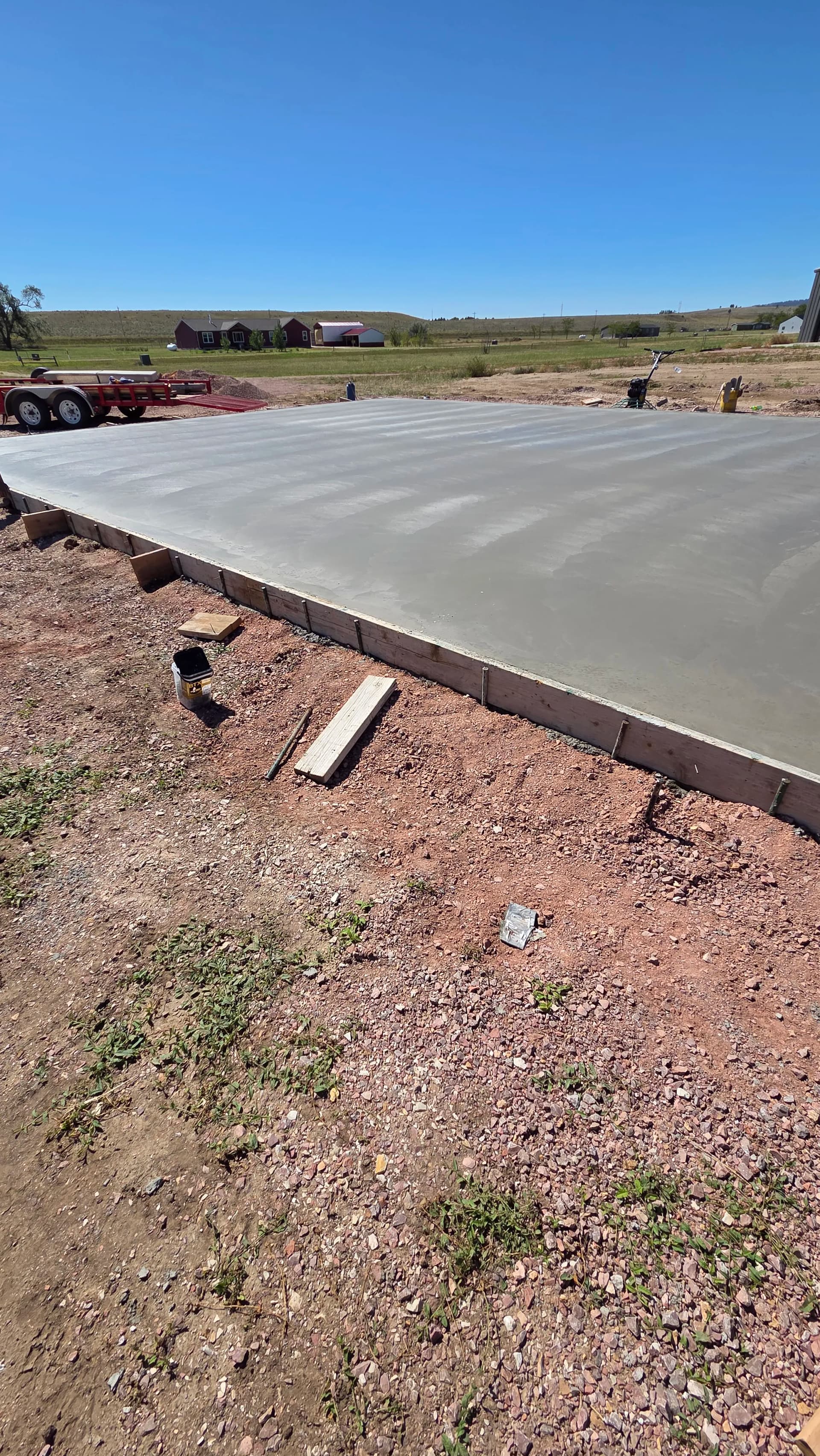
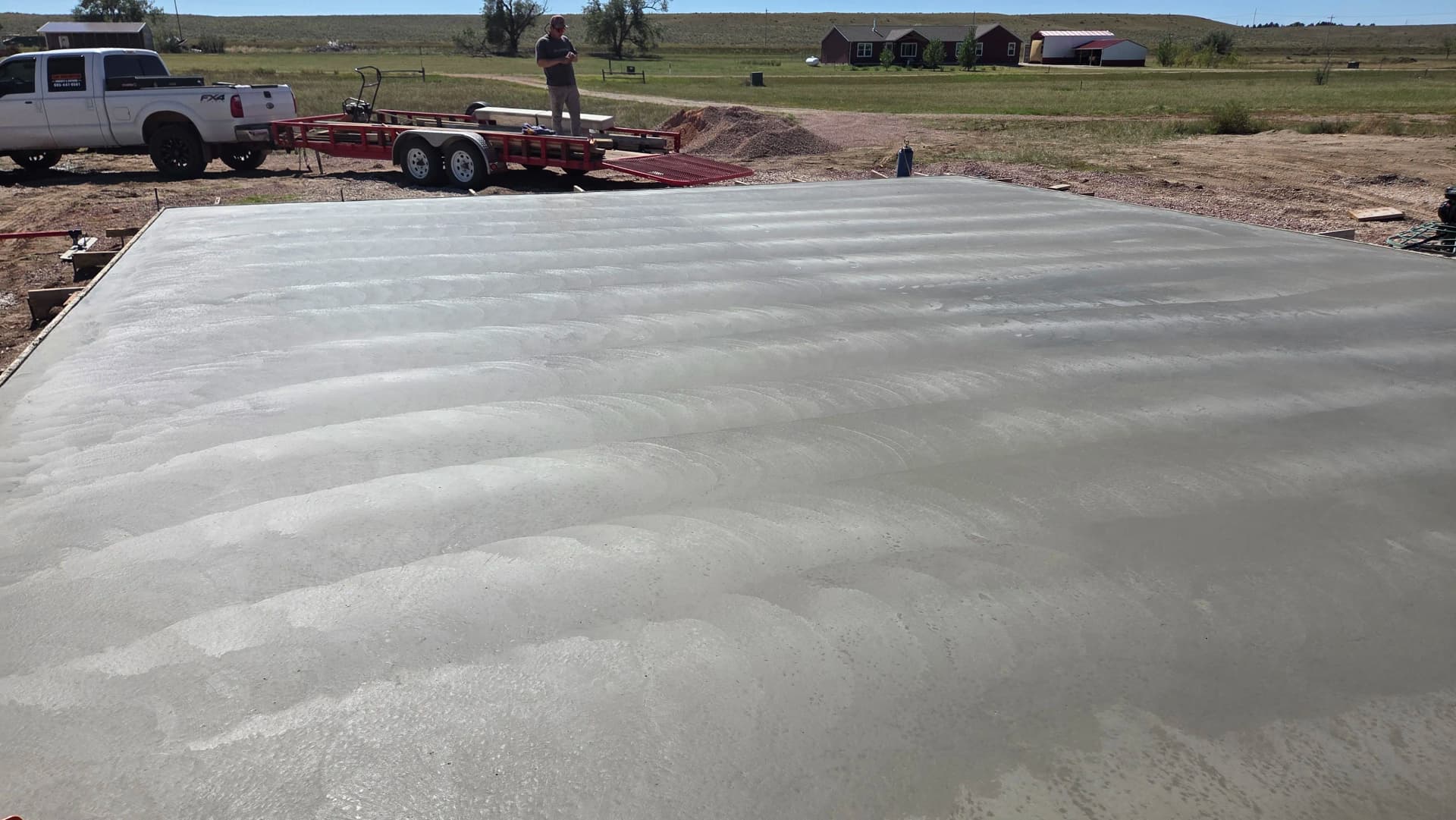
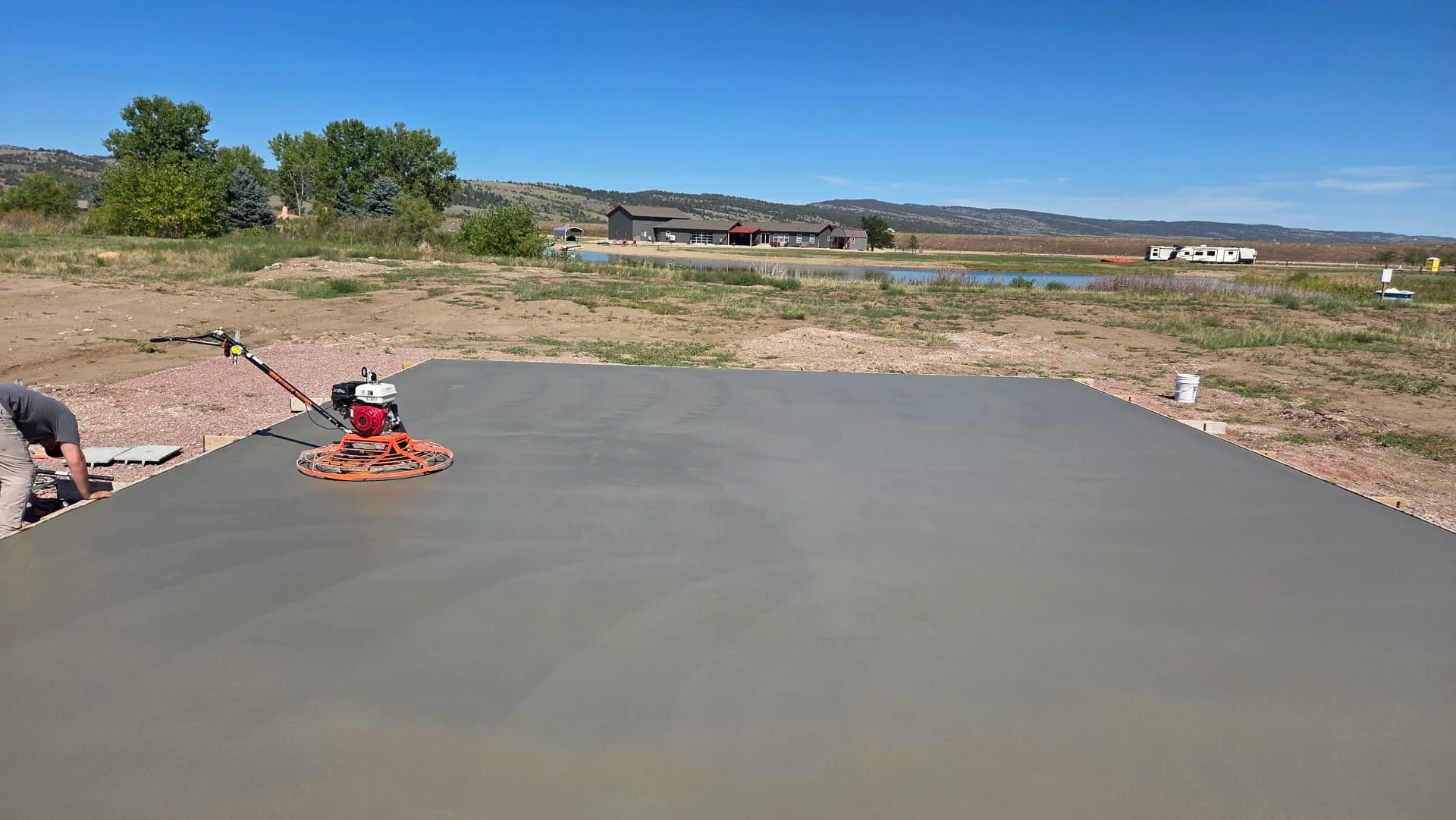
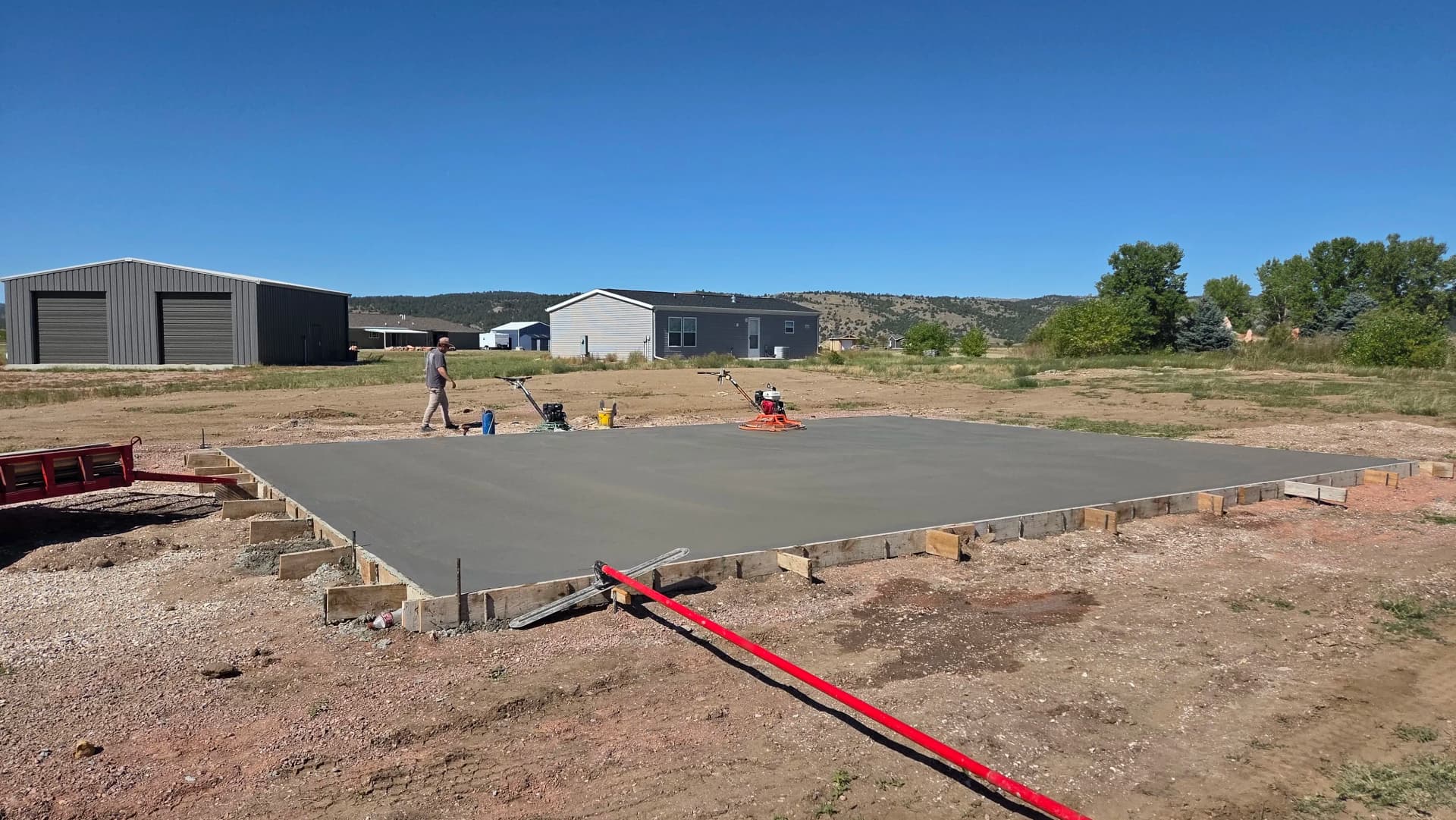
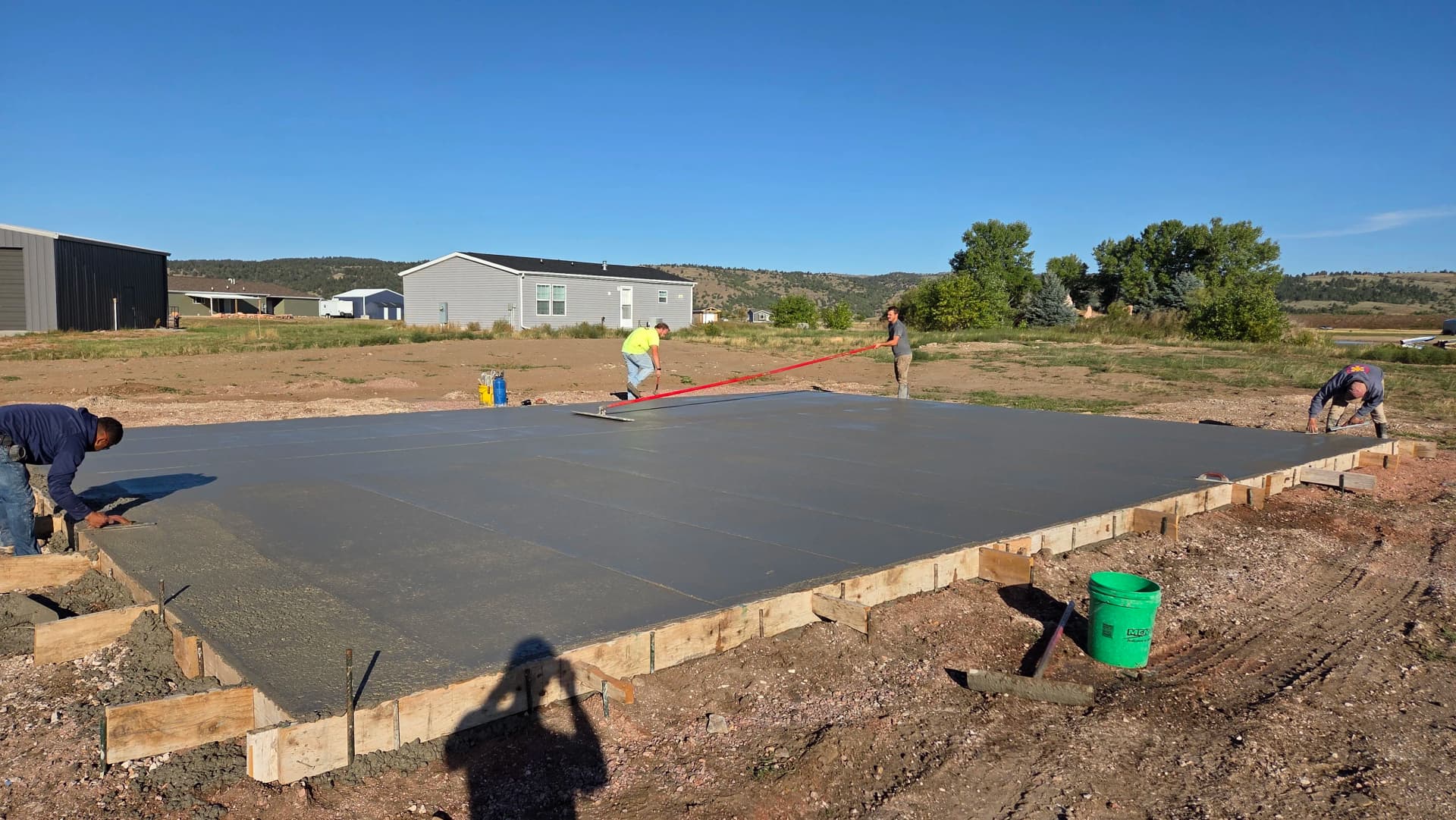
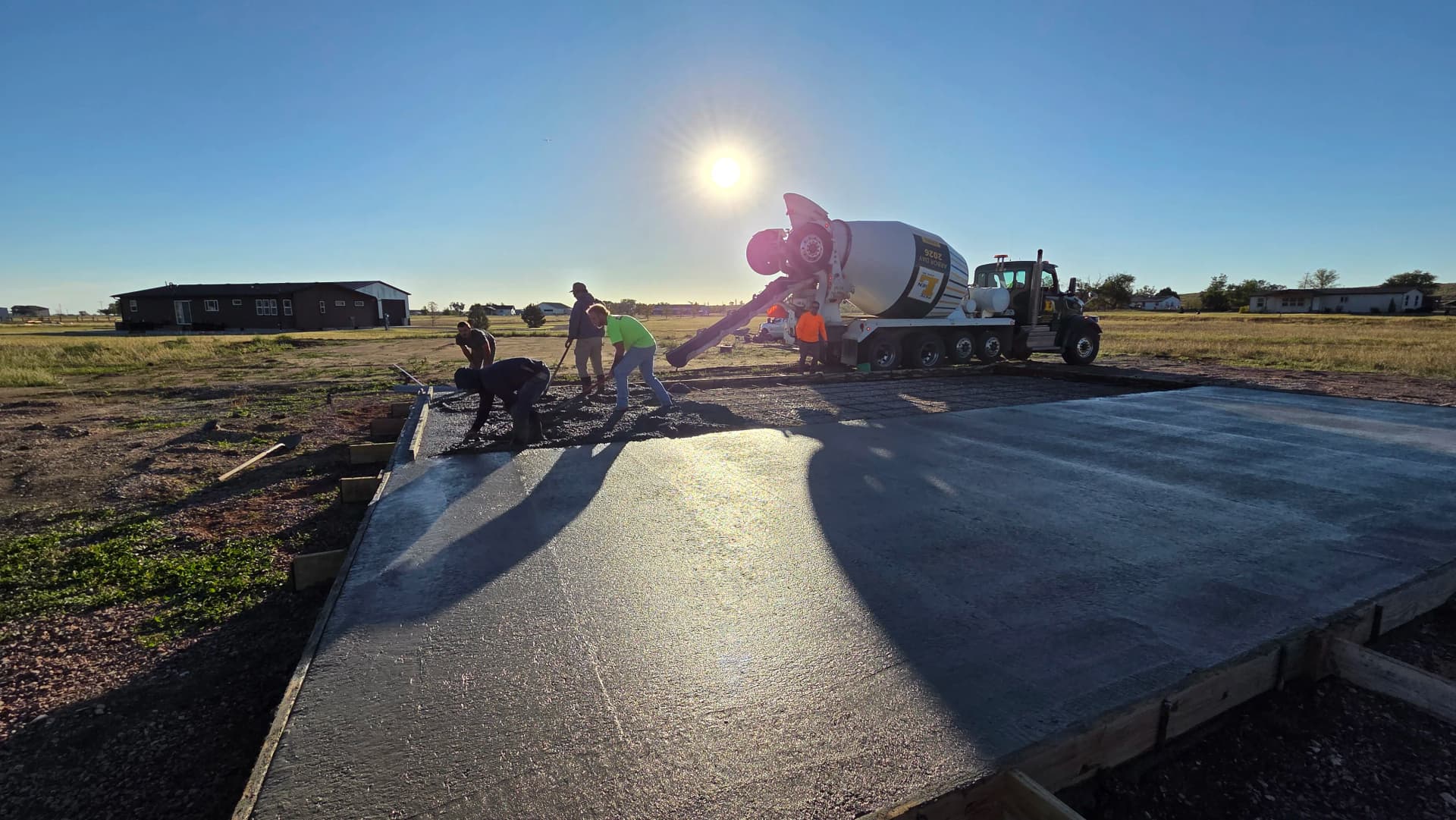
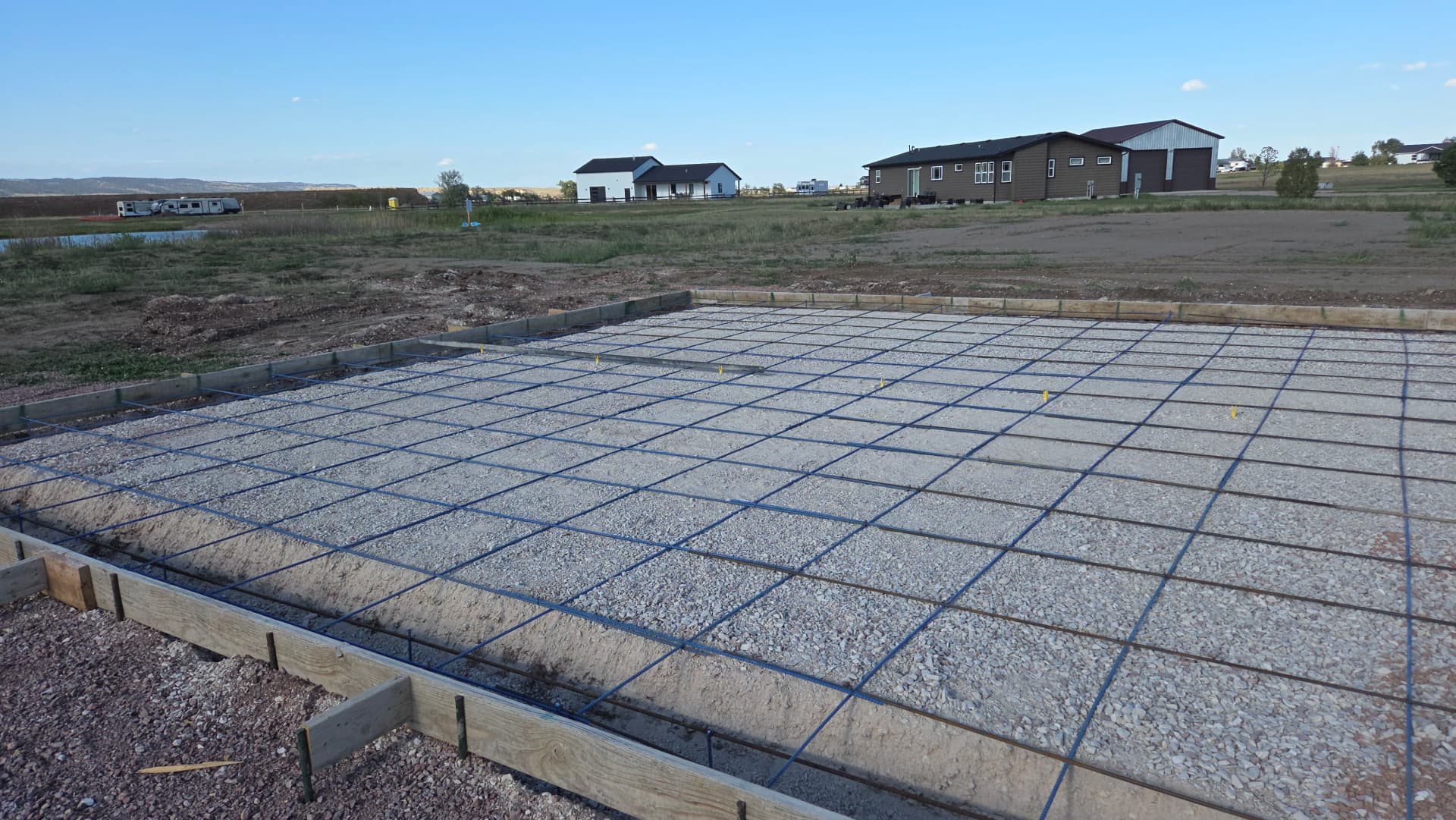
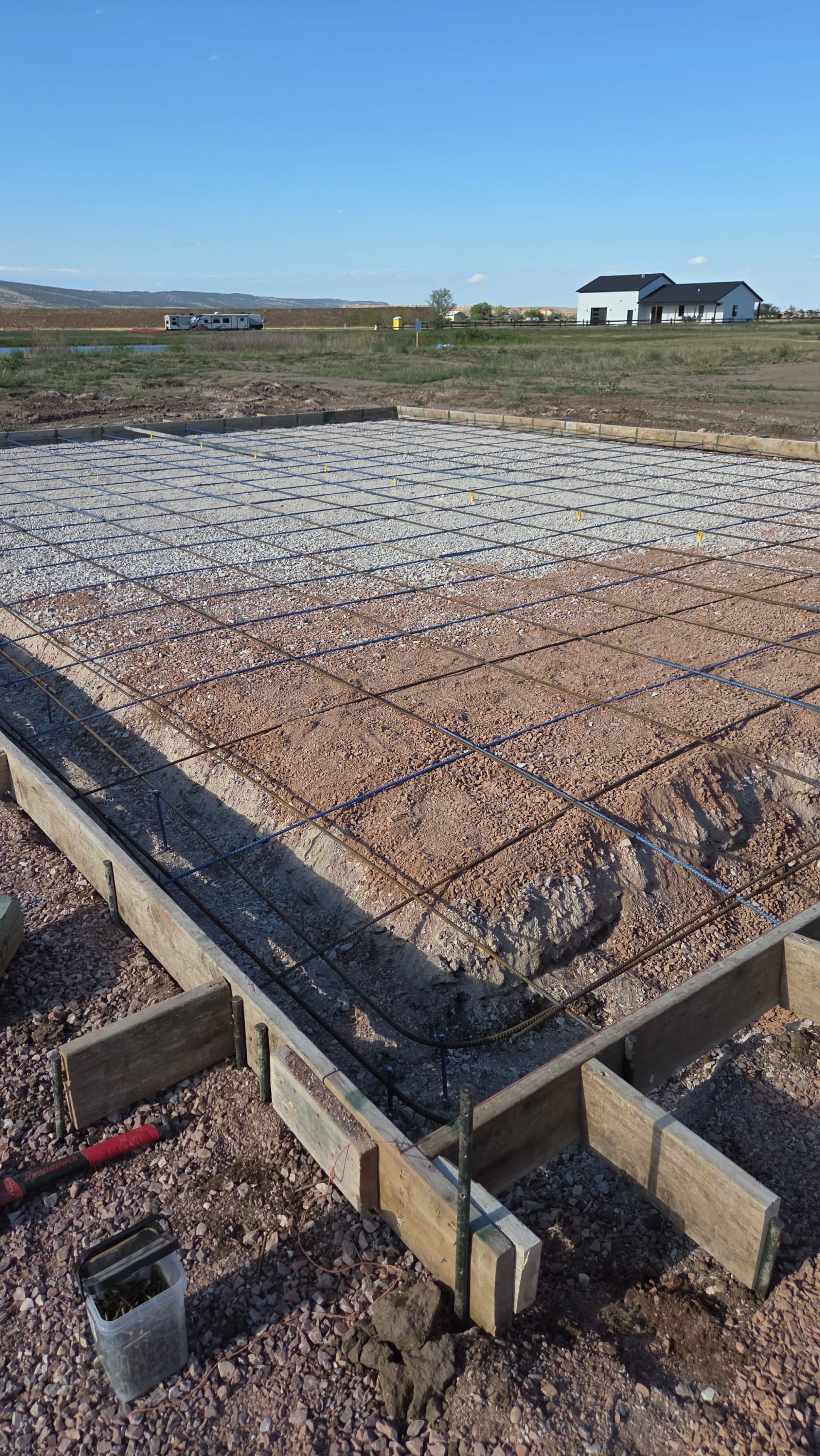
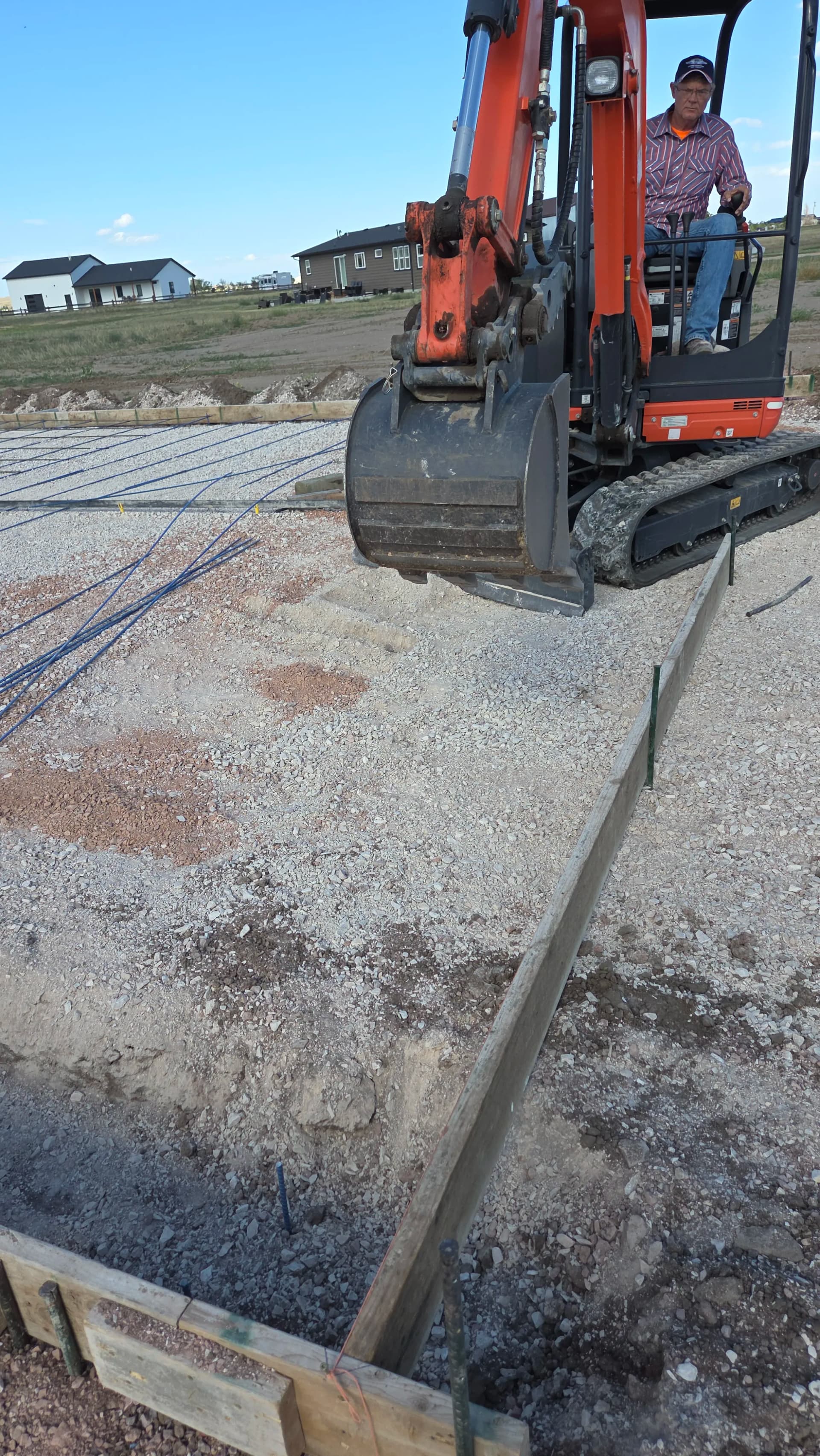
A solid slab starts way before the concrete truck shows up. Here's a look at the full process on this thickened-edge slab we completed out in the Angostura/Hot Springs area - from prep and rebar layout all the way through the finish pour.
The prep work on a job like this is where everything gets decided. We set the forms to create that thickened perimeter edge, brought in gravel base material, and laid out the rebar grid across the entire footprint. That rebar isn't just sitting there - it's tied in and positioned to stay embedded in the concrete where it actually does its job. A slab without proper reinforcement is just waiting to crack under load or shifting ground.
Once the forms were set and the steel was in place, the ready-mix truck rolled in and we got to work. You need enough hands on a pour like this to keep the concrete moving and leveled before it starts to set. Our crew worked the screed across the surface, pulling it flat and consistent edge to edge. After screeding, we ran power trowels over the surface to pack and smooth it down to a clean, hard finish.
That thickened-edge design is worth understanding. The perimeter of the slab is poured deeper and wider than the interior - which gives it the structural strength of a footing right where the load bears down. It's a common method for shop buildings, garages, and ag structures out here where you need a dependable foundation without a full stem wall. Done right, it handles freeze-thaw cycles, heavy equipment, and decades of use without giving you problems.
We take the long view on concrete work. The stuff we pour today is still going to be there 30 years from now, so we're not cutting corners on base prep, rebar, or finish quality. That's just how we do it.